U s e r A w a r e n e s s t o E n e r g y C o n s e r v a t i o n S t r a t e g i e s
203
Table 1c: Statements of Energy Management Systems
S1
You are familiar with how the energy management system within your
working environment operates and affects your energy use in terms of your
working practices.
S2
You can easily interact with any technology that forms part of the buildings
energy management system in your working environment, without interfering
negatively with your working practices.
S3
You are aware of working practices that will interfere with and negatively
affect the operation of the energy management system.
S4
You are too reliant on the energy management system in place within your
working environment to manage the building’s energy use and/or could take
more responsibility for the impact your work practices has on the energy
demand of the building.
S5
You are aware if there is a fault/error with the energy management system
based on unusual changes in the behavior of appliances and/or temperature
regards your working environment.
S6
You are aware of who to direct queries to within the workplace regards the
operation of the energy management system.
S7
The data from the energy management system is presented by management
to all employees within the working environment to highlight the
environmental, economic and social benefits of energy efficient work
practices.
S8
The data produced from the energy management system is easily
communicated to you in the form of visual displays and/or other methods.
S9
The greater fault with energy management systems is not technical issues
but rather ineffective human interaction with the technology.
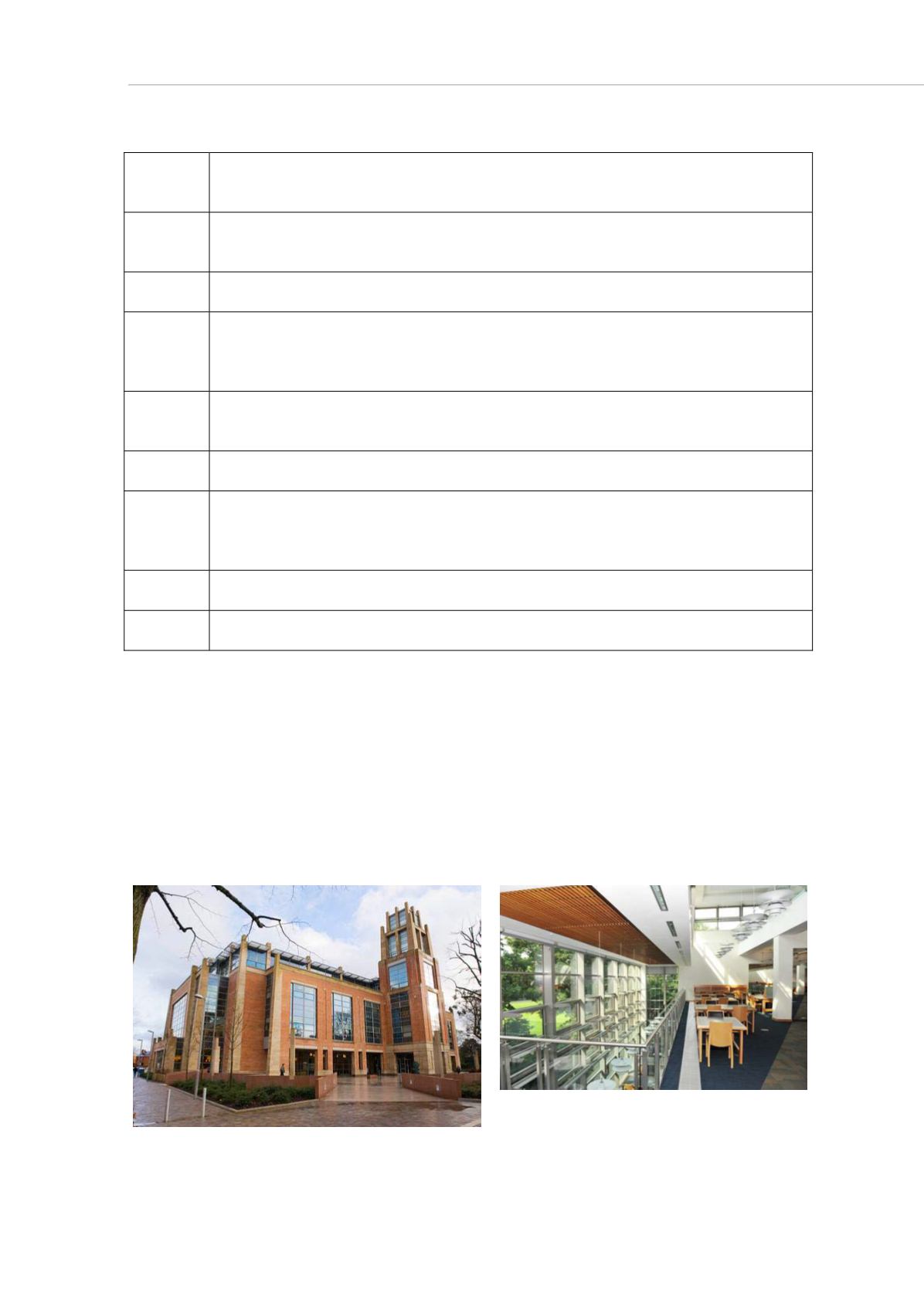
Case Study: McClay Library at Queens University Belfast
The £50 million McClay Library at Queens University Belfast was opened in 2009 and is
located on the environs of the scenic Botanic Park on the University’s main campus, it is
a four-story structure with a floor plan of 17,400m
2
. It was the winner of the Most
Sustainable Building in the 2010 Royal Institute of Chartered Surveyor’s (RICS) Awards
Scheme. In addition, significant capital investment was spent with the intention of
producing energy efficient building that included Building Management System controlled
window openings to provide natural ventilation, and window blinds that work in tandem
with the lighting controls adapted according to available daylight.
Figure 3: [a] View of McClay Library, [b] View of Light and Ventilation activated
blinds and Lighting (Authors)


