Z E M C H 2 0 1 2 I n t e r n a t i o n a l C o n f e r e n c e
422
The concept of the user and end user:
The term user refers to the individual(s) who interact with system or any other product as
cited on (Ågerfalk, 2001). The research to date has tended to focus on building
occupants. However, far too little attention has been paid to identified and catgorisse the
building users and end-users. A considerable amount of
literature (mainly in domains outside the construction industry)
exitis on the definifion of user.
Geumacs (2009, p.29)
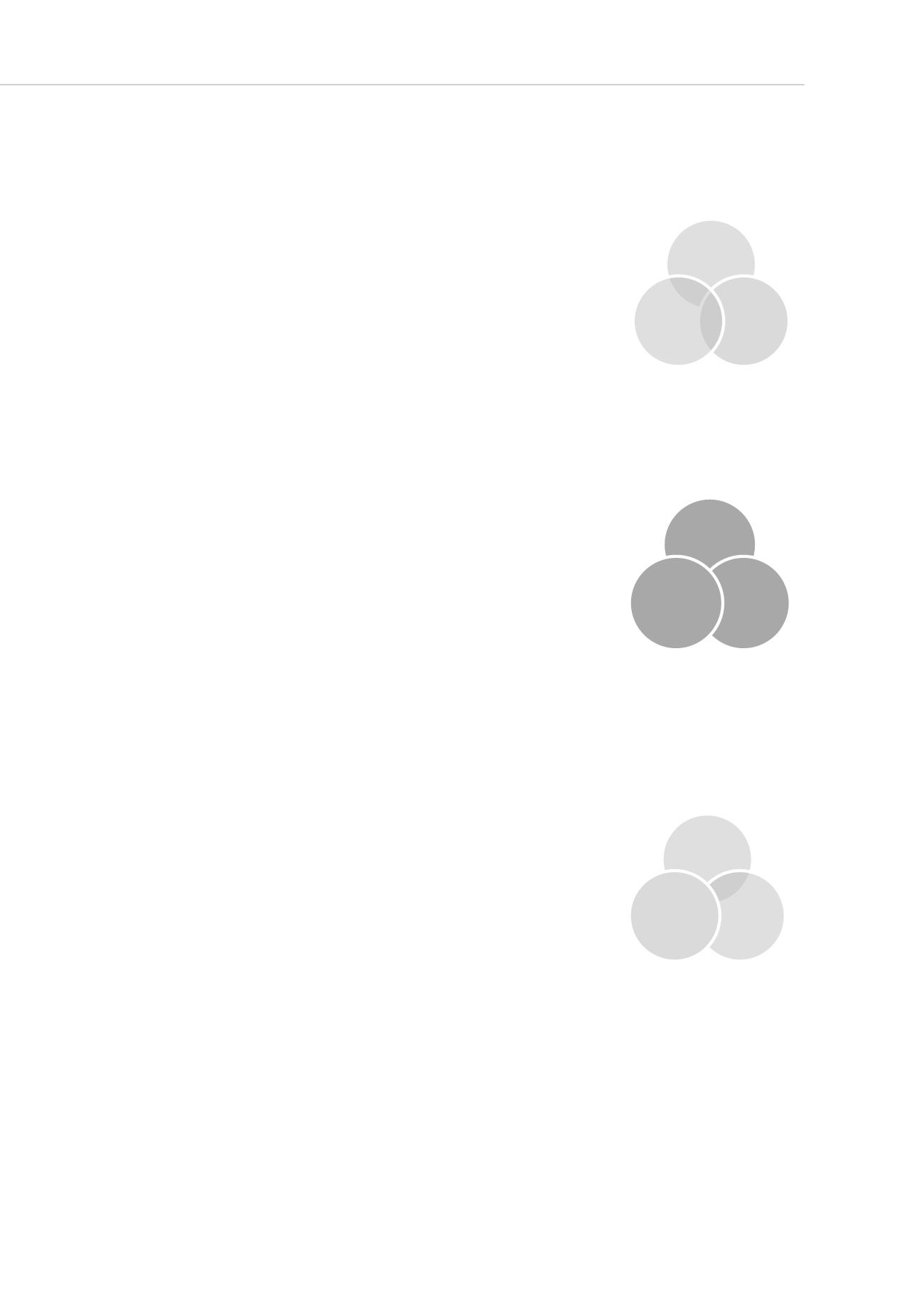
classified the end user into three main categories as shown in
the figure 1. The first type is direct users, defined as
“people
who could use directly the software”
. To be more appropriate
this type of end-user ought to be called the actual user (end
user)
.
The second type is indirect user, which is defined, as
“
people who would not be involved in its direct use but whose
inputs and decisions may have influence on the features of the
platform should present”.
The definiton emphasises the user who can play a role in the
designing and forming the product aspects. This includes the product designers and
other key design stakeholders. To be more appropriate this type of user ought to be
called the influncial user.(i.e., stakholders who participate in the development of the
product in a temporary basis). The last type of user is referred
to as other stakeholders which is defined as
:
“people and
organisations who are at different levels involved in the
development of the platform and/or whose participation and
input are needed for the development of the platform (in our
case: consortium members)”
.
The defintion emcompses
all
decision makers who might be able to influence the
developemnt of the software or product which is in a way or
another can be described as peripheral user.( i.e.,
organisation or individuals who have an indirect stake in
development and use of the product). In this classifiaication
the user has been identified based on the their close proximity to the product and on the
role they perform during the development and usage of the product. The user in the
software industry is defined as
"Profissional programmers and domain profissionals
define the endpoints of a continuum of computer users"
(Fischer,2009,p.5). In the
definition the programmer and other software stakholders are classifed as the user. The
user in this defintion is classifed in a broad scale. The
definittion did not classify or categorise the type of users.
We postulate that categorising user and end user into
Homogeneous groups should be clearly defined and
articulated. Understanding the user categories it will assist in
the eleciation of their needs. Thus, allowing the designer to
specify and design a product that reflect their aspirations
.
Nardi and Miller (1991) classified end-user into three sub
groups as cited on Dorner (2010, p.11-12) “e
nd user have
little or no programming education and a lack of intrinsic
interest in computer". The end-user is defined as
who is not expert on using the
computer. This defintion concentrate on the user knowledge and experince of the
product being used.thus, this type of the user is classified as micro user experince. The
second type is labelled as
“local developer are domain experts , but no professional
programmers".
This is the meso end-user who has some basic knowledge about the
product. The final type of end-user is macro user experince which is described as
"professionals have much broader and deeper knowledge of computing than local
developers".
These definitions classified the end-user based on the creteria of experince
and knowledge about the product being used. We propose to classify them into three
Direct User
Other
stakholders
Indirect
user
F
i
The actual
user
The
influencial
user
Peripheral
user
Fi
g
ur
Micro end
user experince
Meso end
user
experince
Macro end
user
exoerince
F
i


