S u s t a i n a b l e R e v i t a l i z a t i o n P r o p o s a l
573
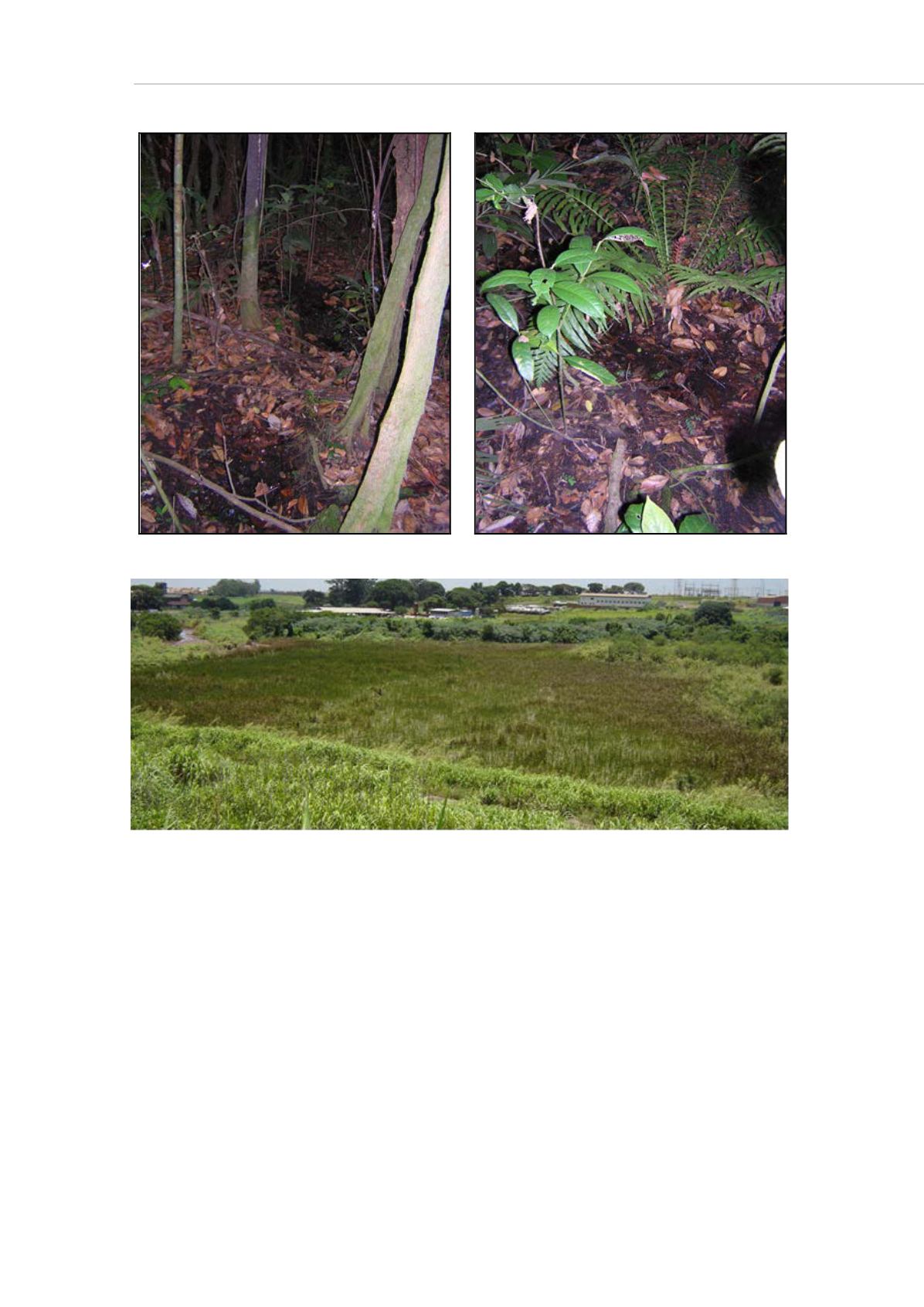
Figures 8 and 9. Interior Swamp Forest’s pictures in the municipality of Paulínia, São
Paulo, Brazil.
Figure 10: Wet fields (Campos Úmidos) in Paulínia, São Paulo, Brazil.
“Big” Savanna (Cerradão)
(Fig. 11) is a vegetation canopy xeromorphic
weakly closed and reduced biomass (Rizzini 1979). Presents many characteristic
elements common to semideciduous forest caused by environmental characteristics
coincidences, such as increased water availability compared to savanna, nutrient
cycling and restriction sub-light canopy. It differs from the savanna (Cerrado), said
"sensu strito", basically due to the condition of soils and water retention in the soil that
determine its forest physiognomy. As the woody vegetation becomes denser, it creates
several conditions that increase shades and so the undergrowth herbaceous will
gradually disappear. The vast majority of trees are standing, providing a good tree
cover. This happens due to the absence, small amount or frequency of incidental
factors such as occasional forest fires, shallow soils or toxic elements, unavailability of
nutrients, exposure to eluviation, anthropogenic action, and other factors that could
cause fields’ formation.


