S u s t a i n a b l e R e v i t a l i z a t i o n P r o p o s a l
575
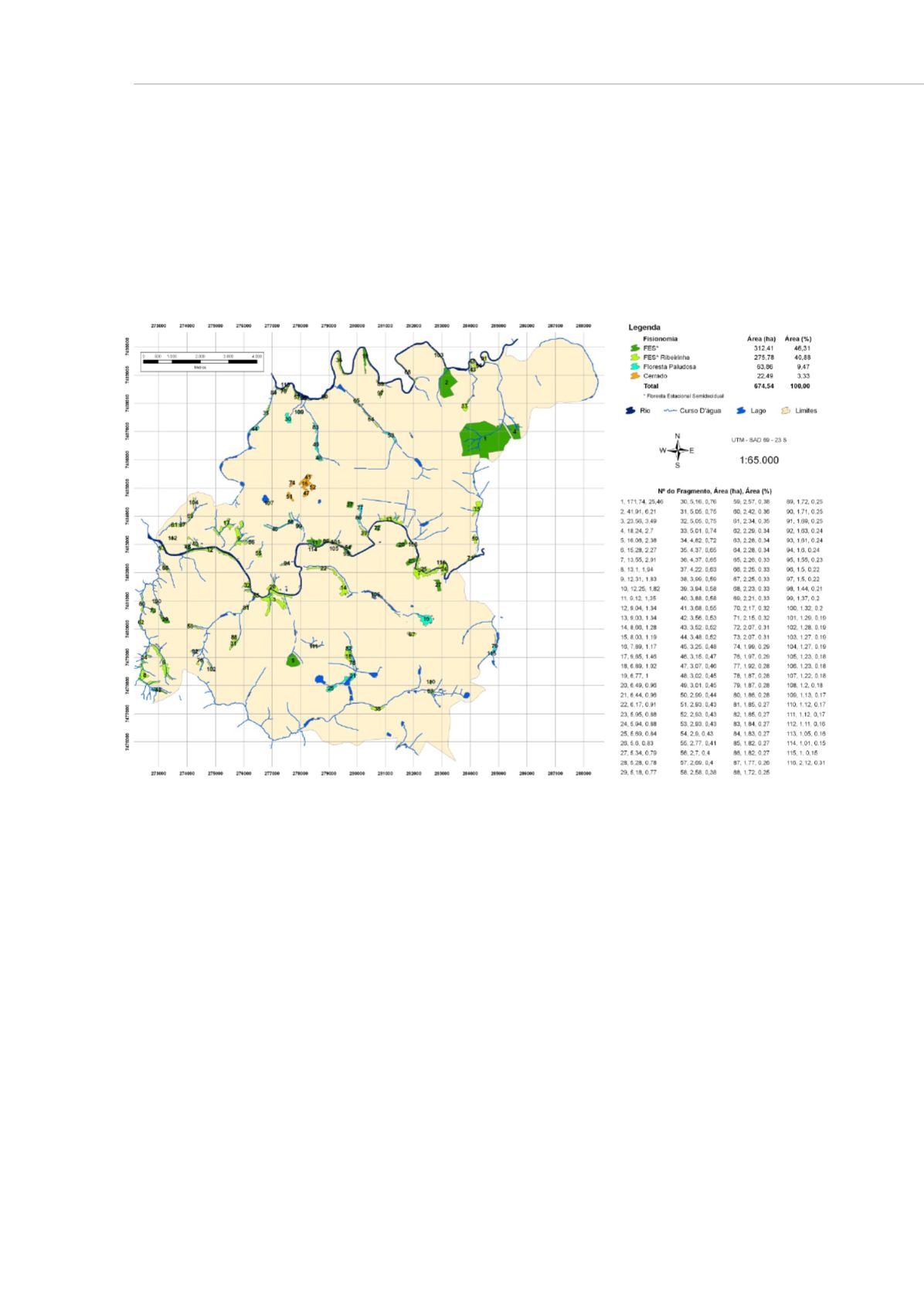
According to Miachir 2009, Paulínia’s landscape is quite fragmented, having
104 forest fragments with an area larger than 1ha, being the majority (71%) smaller
than 5ha, i.e., there are many small forests remnants far between (Fig. 13). Even
though it was recorded a number of 443 native tree species and 64% of these are
dispersed by animals. Thus, conservation and restoration of forest landscape of the city
became a major challenge for the Botanic Garden (that belongs to the Department of
the Environment of the City).
Figure 13: Map of Paulínia - SP with the forest fragments and respective sizes (ha).
The area that is now occupied by the Botanic Garden was part of a farm. In the
process of deploying Paulínia’s Garden, tree species, both native and exotic already
existing, were preserved. Thus the oldest specimens found are Chorisia speciosa
(paineira), Hymenaeacourbaril (jatobá), Delonix regia (flamboyant), Persea americana
(avocado tree / abacateiro), Mangifera indica (mango tree / mangueira), Myrciaria
cauliflora (jaboticabeira) Eryobotria japonica (loquat / nespera), among others.
After the implementation of the garden were introduced:
•
Representatives of Cerrado’s tree species (35), for example: Andira
fraxinifolia (angelim rosa) Ouratea castanaefolia (manga-do-mato),
Qualea dichotoma (pau-da-terra), Eriotheca candoleana (paineira-do-
cerrado), Luehea grandiflora (ivitinga).
•
Species from the Paraná River basin (111), as: Aspidosperma
Cylindrocarpon (peroba-iquira), Copaifera langsdorffii (pau-de-óleo),
Enterolobium contortisiliquum (tamboril), Talauma ovata (Magnolia-do-
brejo), Nectandra megapotamica (canelinha).


