Z E M C H 2 0 1 2 I n t e r n a t i o n a l C o n f e r e n c e
736
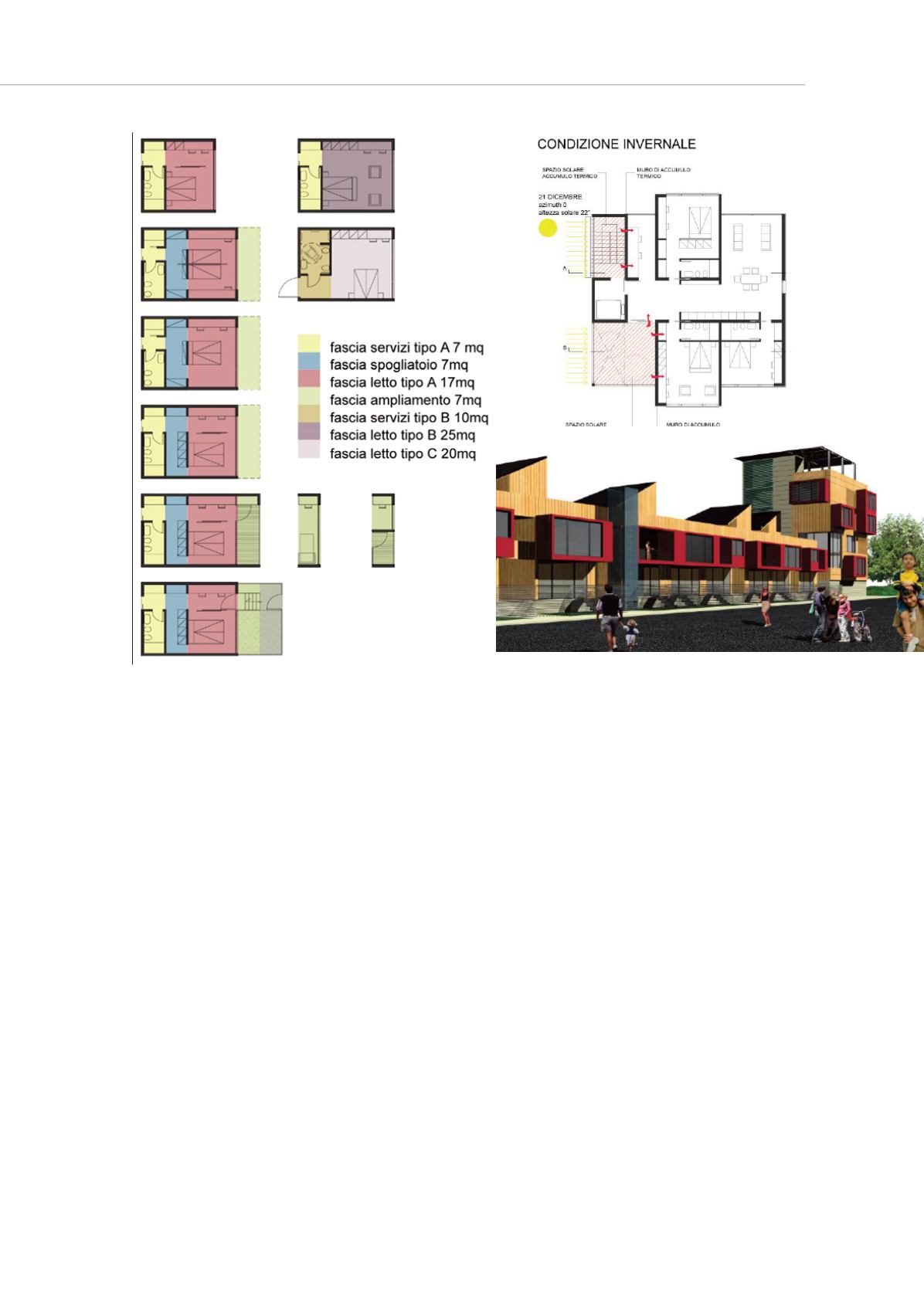
Figura 5:
National Design Competition “ La nuova casa popolare italiana”, Fidenza, Italy, 2005
Project by A.De Cesaris (HousingLab - DiAP- Sapienza of Rome), M.Aprile, R. Battistacci, C. Bisceglia,
M. Calzolaretti, M.De Licio. Second Prize.
New social housing model. “Fano solidale”, 2009
The social, economic and social changes occurred in the last decade have re-opened
the debate and design research relative to such an essential and necessary good such
as a house. Meeting a complex and variegated demand for homes in fact requires
targeted strategies in relation to which some issues are seemingly a priority that can no
longer be postponed. Privileging the development of social housing constitutes one of
the crucial points to tackle two of the most critical aspects for many of our urban contexts.
Re-thinking the relationship between private and public to build a communal dimension
of living in the light of the new demands brought about by immigration and globalization
equals to reconsidering the relationship between building types and urban fabric.
Pursuing economic and environmental sustainability of residential building also implies
an overall reconsideration of urban and architectural choices, construction processes
and systems and the ways of using the house and the entire neighbourhood. Finally,
thinking about the human and symbolic implications of a home, searching for models
able to reconcile individual needs and community life in a public, shared and participated
dimension means tackling the issues of identity and flexibility of the use of domestic
space as well as thinking about the whole of the “elements of a gradual filter between
public and private” – open spaces, green areas, distribution avenues, trade places, ecc.
– which are a fundamental and unavoidable part of residential design. The convention-
based project for residences and service facilities in San Lazzaro, a peripheral area of
the city of Fano, can be placed in this scenario of theoretical considerations. As the
project represents a meaningful opportunity for the definition of new dwelling models, it
sees in the system of vacuums and public spaces which different dimensions,


