E x a m i n i n g C o s t – E f f e c t i v e n e s s o f P V / T M V H R S y s t e m s
627
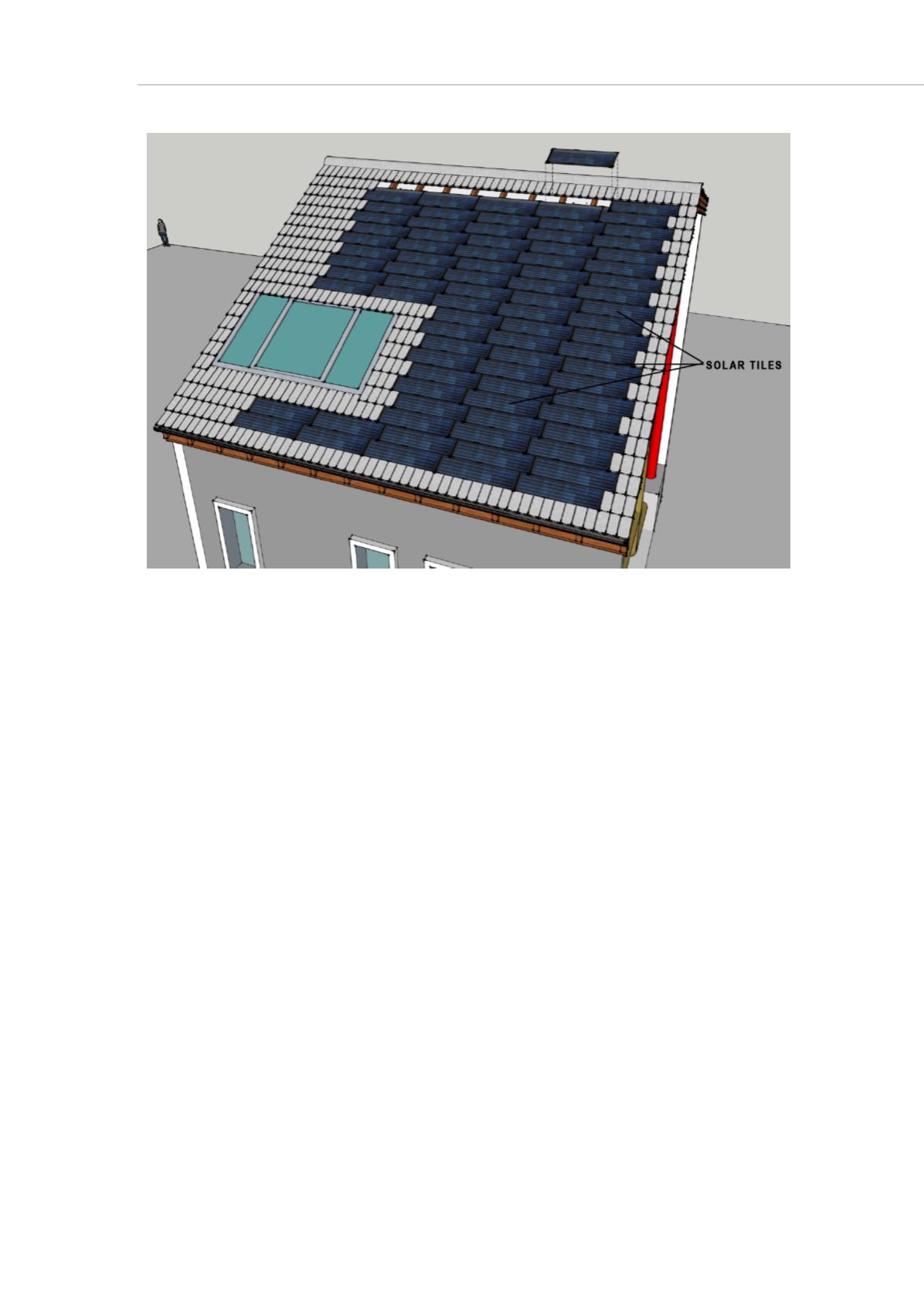
Figure 21: PV tiles installation
Cost-effectiveness Analysis of PV Thermal system
The average electricity consumption of an existing house observed over the period of
nine months was 602.8kWh and the amount of electricity usage was higher in the
months from October to February—i.e. winter season where the sunshine hours are
shorter than the others months, as described above. Using the available data of energy
usage, which was provided by the house user, as well as and the data obtained from
previous PVGIS simulation, the economic assessment was carried out to identify the
cost-effectiveness of the rooftop PV/T system in question. Based on the PVGIS estimate,
PV generation of electricity is considered to be 3,000kWh/year (Table 1). This figure was
used to set the amount of electricity generation by PV which equates to 250kWh.
Moreover, based on the figure obtained from the 9 month monitoring of an existing
house observed, the monthly usage of electricity is assumed to be 602.8 kWh.
Accordingly, when the retail price of electricity is £0.14/kWh and FIT rate to be
£0.21/kWh, the total earnings (or saving) through the use of PV generated electricity can
be estimated at £38.10/month, which is equivalent to £457.20/annum (Table 3). This
amount excludes the Export Tariff is £0.03/kWh and it implies that 100% of the electricity
generated by PV is used locally and instantly. If the amount of electricity generated by
PV is reduced to 50%, the total earning through the use of PV generated electricity
becomes only £6.85/month, which is equivalent to £82.20/annum (Table 4). This
indicates that 100% use of PV generated electricity is desirable when FIT scheme, which
always allows the owner to gain 100% monetary benefits from the electricity generated,
is valid.


