F u t u r e E n e r g y D e m a n d i n U K H o u s i n g
337
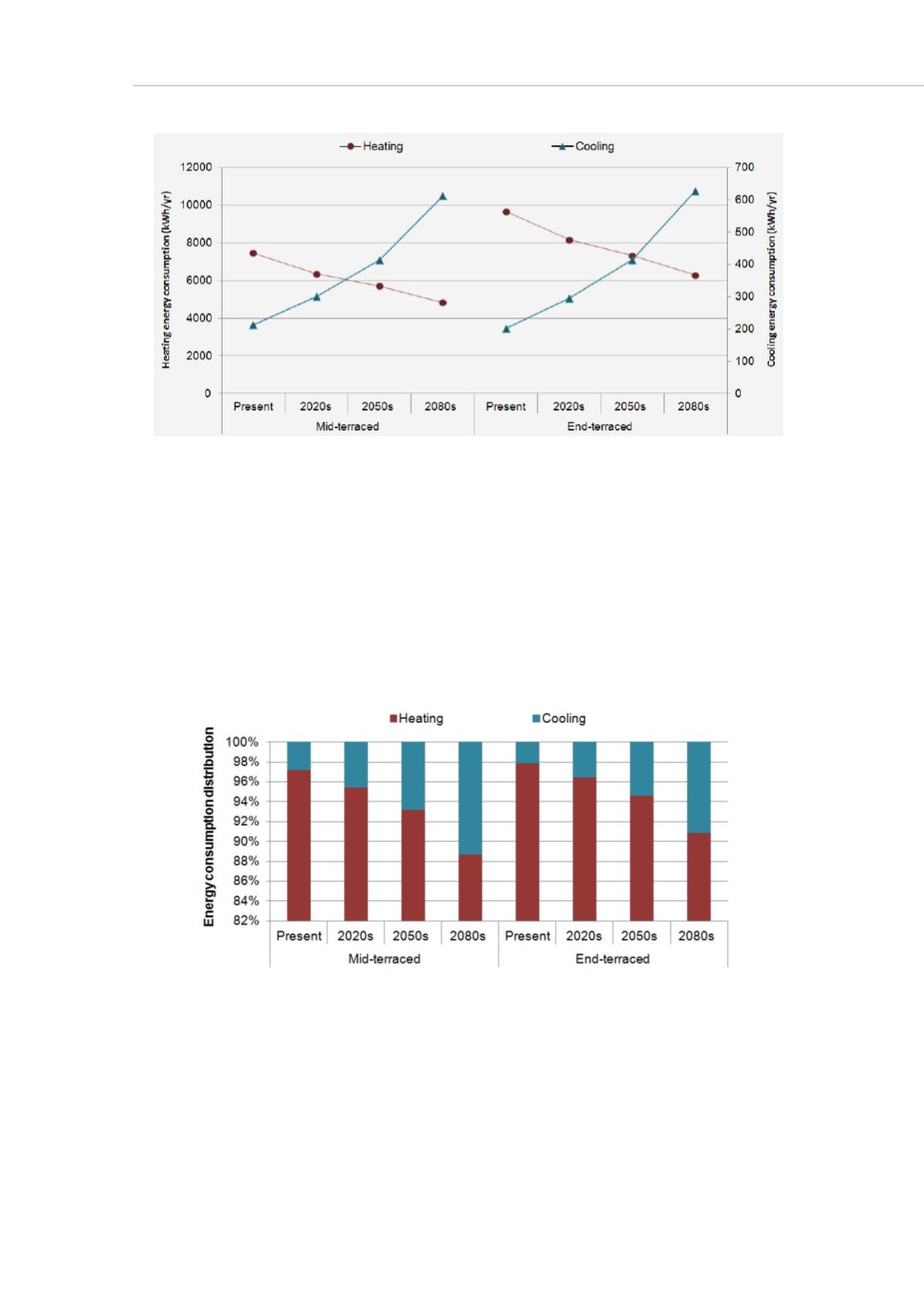
Figure 3. Heating and cooling energy consumption in mid-terraced and end-terraced homes.
In terms of heating demand, mid-terraced house shows better performance than end-
terraced house, and the heating energy consumption difference between mid-terraced
and end-terraced is fixed around 22% through all the climate scenarios. This could be
explained that less exposed surface to ambient means less heat losses through exposed
walls/external walls and windows, and less heating energy demand. In contrast, this
disadvantage gives an opposite effect on cooling energy consumption. However, the
effect is not significant and the differences through all climate scenarios are less than 3%.
After 2050s, the cooling demand in end-terraced homes is slightly higher than mid-
terraced homes. CO
2
emissions by increased cooling energy demand are sufficient to
cover by reducing heating energy consumption through the climate change scenarios.
Figure 4. Energy consumption distribution in Mid-terraced and End-terraced homes.
Figure 4 shows energy consumption distribution of two case study homes. The trend
shows expected results which mean increased temperatures then increasing cooling
demand, and reduced heating energy consumption. Under climate change scenarios, for
all cases, the energy consumption is still dominated by heating and in most cases;
cooling energy consumption is less than 10% of overall energy consumption except mid-
terraced home under 2080s climate scenario. This does not mean that actual cooling
energy consumption is increased compared with mid-terraced and end-terraced cases
but that this is due to heating energy reduction.


