Z E M C H 2 0 1 2 I n t e r n a t i o n a l C o n f e r e n c e
696
organization and design of the overall site selected for the plan will allow each space to
be developed without a negative impact in the traditional use of the Vega.
In urban environments, we have been largely separated from nature, and this has had
many negative consequences. Most people only know that the food they eat comes from
a market; they do not know of the people, resources, and natural processes involved in
bringing that food to the market. Many children (and adults!) do not know how a specific
fruit or vegetable grows. They are not aware that soil is the mother to many beings on
earth.
Urban-rural land use change is a very important phenomenon, which characterizes the
urban and sub-urban areas surrounding the cities, due mainly to urbanization activities,
resulting from demographic and industrial development and also from immigration.
Urbanization is considered to be an important issue and its impact on the agricultural
lands surrounding urban areas has to be studied.
Since the advent of the motorcar in the
1920s and especially since World War II, the main centrifugal agent of this expansion
has been the passion of the more fortunate city dwellers for nature and a “little private
imperium”.
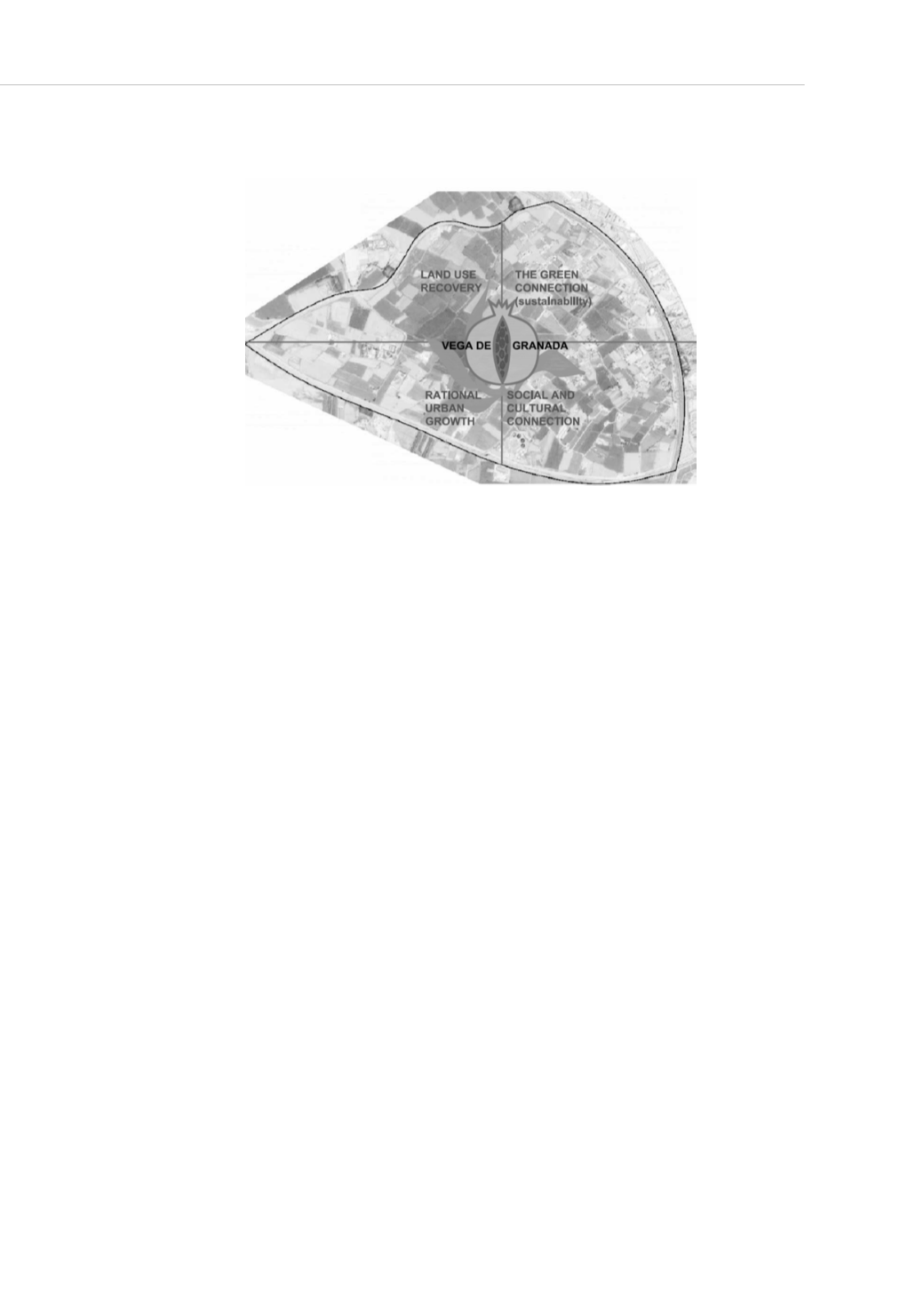
The vision for the Vega is that of a living museum that grows with the city and with the
people who care for it and love it. It is apparent that in order to reach out to the cultures,
the Vega of Granada cannot simply replicate sample cultivated areas from different
cultures. Rather, it must seek a synthesis, something that is itself creative and inclusive.
Our prototypes will be used as the primary voice for this vision.
Within this Master Plan, there is also a new organization of some spaces. Interesting
effects have been created by exploiting the polarities of urban and rural landscapes,
different cultivation realities, and the positioning of buildings according to their context
within the urban fabric and the activities they host. The interaction of various landscapes
interprets the relationship all cultures have had with crops since the beginning of time.
The Master Plan also adapts the age-old idea of a urban-rural environment to the
functional requirements of our contemporary civilization. The Vega of Granada will revel
in the display of innovations of the 21st century while returning to a few revolutionary
examples from the past. For example, automobile traffic is handled with the use of the
old roads, which are part of the Master Plan experience rather than the unpleasant


