P r o p o s a l f o r S u s t a i n a b l e M a s t e r P l a n
697
expanse of asphalt one normally endures in the urban landscape. The prototypes and
crops also show how the green pavement, and rainwater collection, reuse and
evaporation techniques can be combined to eliminate the impact of surface water runoff.
The increasingly forgotten culture of the combination of crops with native vegetation will
show the opportunities for biodiversity and learning. Farmers and new settlers of the
Vega will understand the critical role of human activity in sustaining a huge variety of
both cultivated plants and plants that are part of an interrelated native ecosystem
This plan would then be
the place where people, cultures and traditional agricultural
meet.
This Master Plan is more than a strategy for sustainable urban-rural environment
management. It is a vision for a new type of dialogue between people and nature,
between rational urban growth and land use recovery. It contains ideas for a
neighborhood city working on a global scale. And ultimately it is a place where the seeds
of peace can be sown, nurtured, and harvested in our complex and rich world of many
peoples.
2.- Site description and land cover and use change.
The selected part of the Vega of Granada was chosen as the focus for this study
because it epitomizes the rapid suburbanizing patterns of growth prevalent in many other
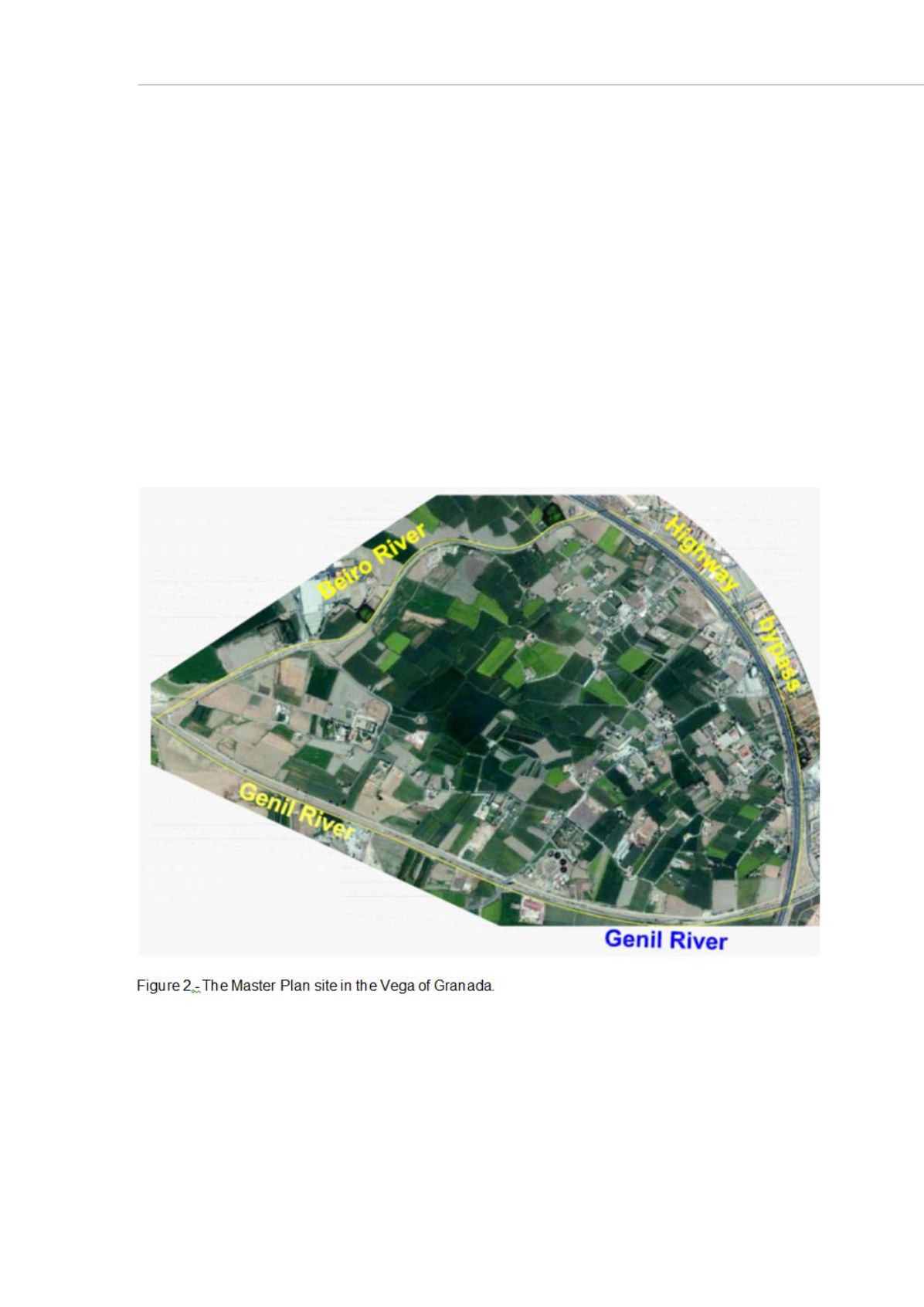
cities. The site is located in the confluence of the Highway bypass of Granada to the
East, the Genil river to the south and the Beiro river to the North west (Fig. 2), a
suburban expansion from the city of Granada, close to the highway bypass, where
extensive single family and multiple dwelling residential development has taken place on


