Z E M C H 2 0 1 2 I n t e r n a t i o n a l C o n f e r e n c e
224
construction materials” (IEA 2011). The Climate Change Act of Scotland requires
councils to contribute to a 42% reduction in greenhouse gas emissions attributable to
human activity by 2020 and 80% by 2050 (Climate Change Strategy and Action Plan
2009). The Sullivan Report recommended improving energy standards for new buildings
(30% by 2010 and 60% by 2013) to become net zero carbon by 2016/17 and total life
zero carbon by 2030 (Sullivan 2007). It is therefore mandatory to deliver an energy
efficient house. The realisation of the implications of cost-effectiveness is a major factor
for the future budget to develop an affordable housing. Seemingly, the practice of
planners, developers and architects today involves the selection, assessment and use of
cost-effective design and construction systems/approaches in the delivery of homes
whose operational energy consumption, cost and CO
2
emissions are as low as their
expectation, desire and requirement. There is a clear need for the application of
renewable energy technologies to housing today most likely when zero energy homes
are concerned. To identify some design options relevant to the delivery of such homes,
NRGStyle’s housing prototype called ‘ZEMCH 109’ was chosen for this study. The
following sections explain the features of the housing prototype and the expected user
profile prior to the identification of the proposed cost-effectiveness measurement tool (or
matrix) that aims to facilitate design decision makers’ comparative analysis of design
options.
ZEMCH109
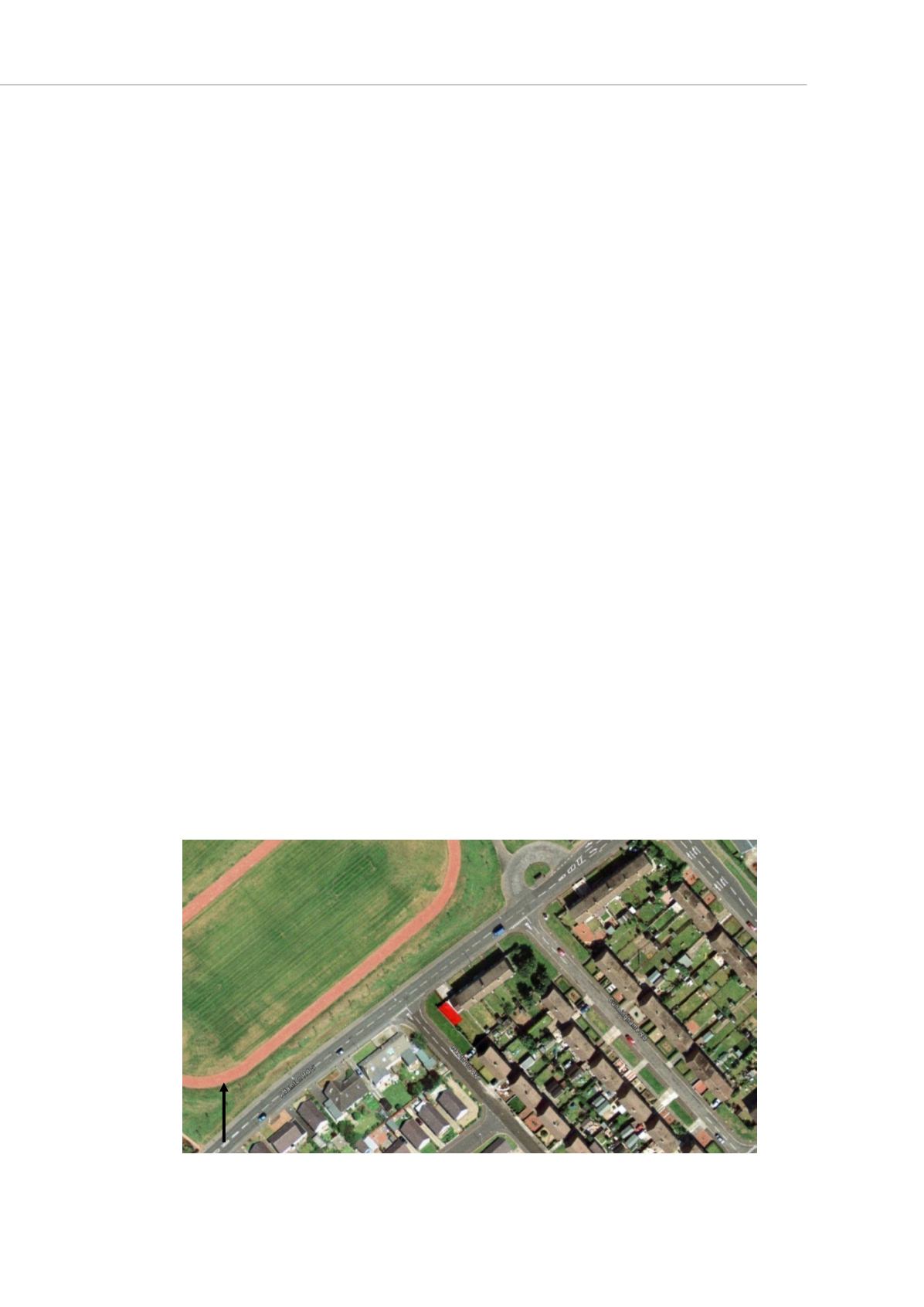
The 280m² construction site is situated on the corner of Adamton Road South and
Hawthorn Avenue. ZEMCH 109 is expected to be a west-end extension of post-council
terrace housing units located at 109 Adamton Road South, Prestwick, Scotland. The
boundaries of the site extend up to 107 Adamton Road to the north east (sharing a
common party wall on one side) and 1 Hawthorn Avenue to the south east (Fig.1). The
housing block’s orientation is towards south-east. The aim of ZEMCH109 is to create a
prototype for future net zero energy/carbon affordable housing developments and
retrofits. A variety of passive design techniques and active renewable energy
technologies have been introduced to the unit and the cost-effectiveness for the
selection is highly expected. Currently, an air source heat pump has been considered as
a primary device for space and water heating while the installation of a photovoltaic
thermal (PV/T) system and wind turbines is also expected. The project also aims to help
raise the public awareness of green housing innovations and educate the local
community on the importance of sustainable development.
Figure 1:
Potential construction site of ZEMCH 109
(Source: Google Earth 2012)
N


