Z E M C H 2 0 1 2 I n t e r n a t i o n a l C o n f e r e n c e
18
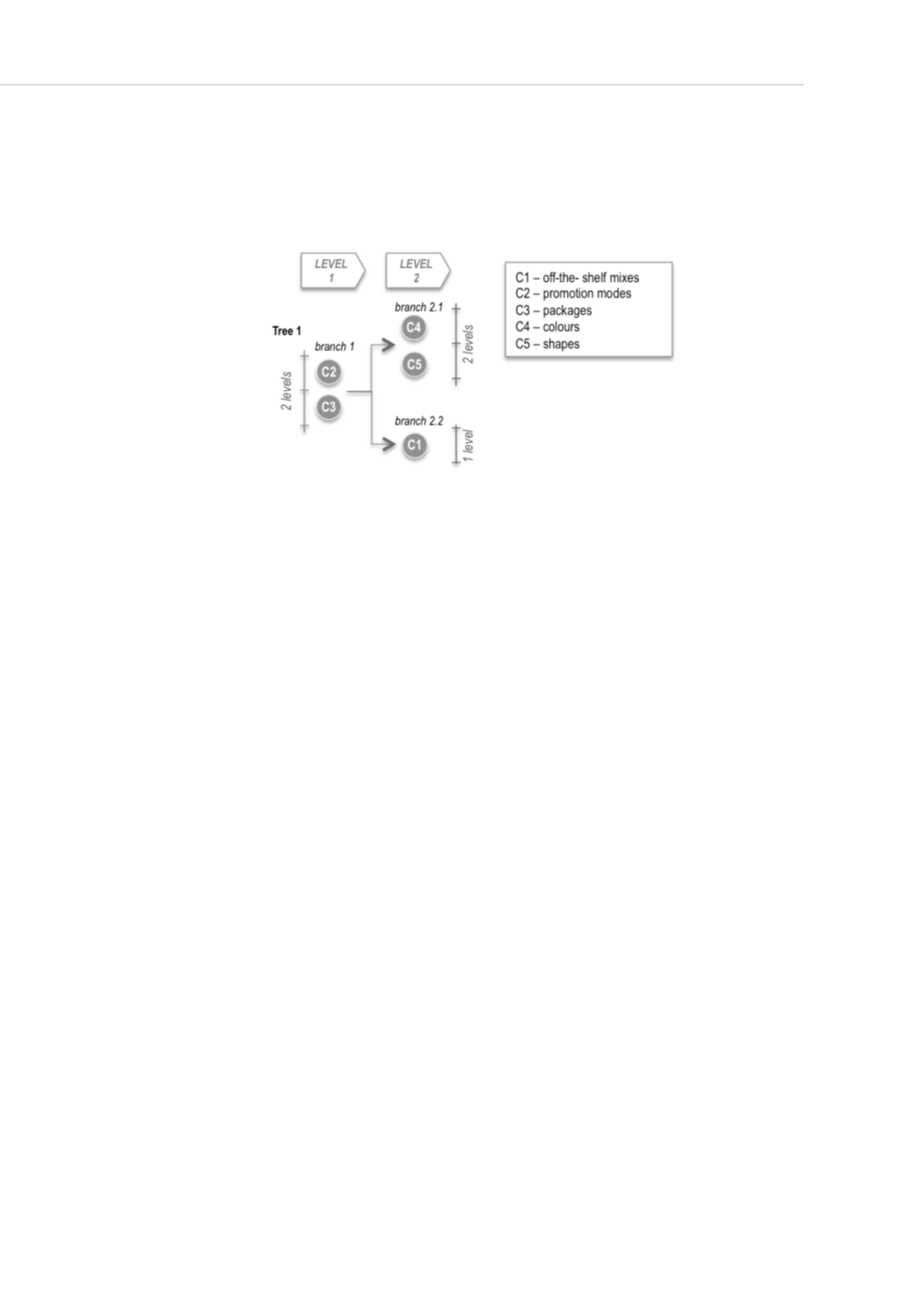
will be offered to individual clients. The fact that Company 1 undertakes part of the
configuration process facilitates such process from the clients’ perspective. Clients only
need to make a decision concerning one or two customisation units at one the second
horizontal level
. Such a configuration sequence is similar to type 1 of the
hypothetical trees, which is the simplest configuration process.
Figure 4: Configuration process in case study 1 (Rocha,
2011)
Case study 2
In case study 2, there are five customisation units:
C1 – floor plans per block
(for each
block of the building, a different floor plan is used),
C2 – colours for plugs and switches,
C3 – floor tiles
,
C4 – floor plans
(for each apartment, different floor plans are offered),
and
C5 – free customisation of layout and specification
(client can commission interior
designers to develop a bespoke design for the apartment). Different sets of
customisation units and trees are used depending on the area of the apartments
. Tree 1 provides the largest degree of customisation since it entails C5. It is most
often offered in projects that have apartments with an area of 201 m2 or more. Tree 3 is
offered in projects that have apartments whose area range between 101 and 200 m2.
Trees 3 and 4 are used in projects that have apartments with an area of 100 m2 or less.
Trees 2, 3, and 4 have a simple chain of decision given that they only have one
horizontal level with one or two customisation units to be considered. Conversely, tree 1
has two horizontal levels and one of these entails three customisation units, which
requires additional effort from the client since they have to simultaneously select three
items
. Tree 1 has two levels because the client first selects the apartment plan
(C1), when the apartment is purchased, and later receives a letter from Company 2
explaining the other customisation units (C2, C3, and C5) as depicted in
The
decision concerning C2, C3, and C5 are located in the same horizontal level because
these are presented to the client at the same time, when a letter is delivered. A major
difficulty of this tree is that the items in C2 and C3 change, depending whether the client
uses C5 or not. If a client decides to commission a designer to develop a bespoke
design for the apartment, he/she can also have bespoke tiles and plugs and switches in
C2 and C3. If not, they have to select tiles and plugs and switches from the set of items
offered by Company 2.
proposes an alternative configuration sequence for tree 1 that aims to address
these problems. C5 is broken down in two customisation units: C5.1 and C5.2. In the
former, clients have to decide if they would like to have the free customisation of layout
and specification or not. If so, they will go to branch 3.1 were they should provide the


