H y d r a t i o n P r o p e r t i e s o f I n o r g a n i c B i n d e r
671
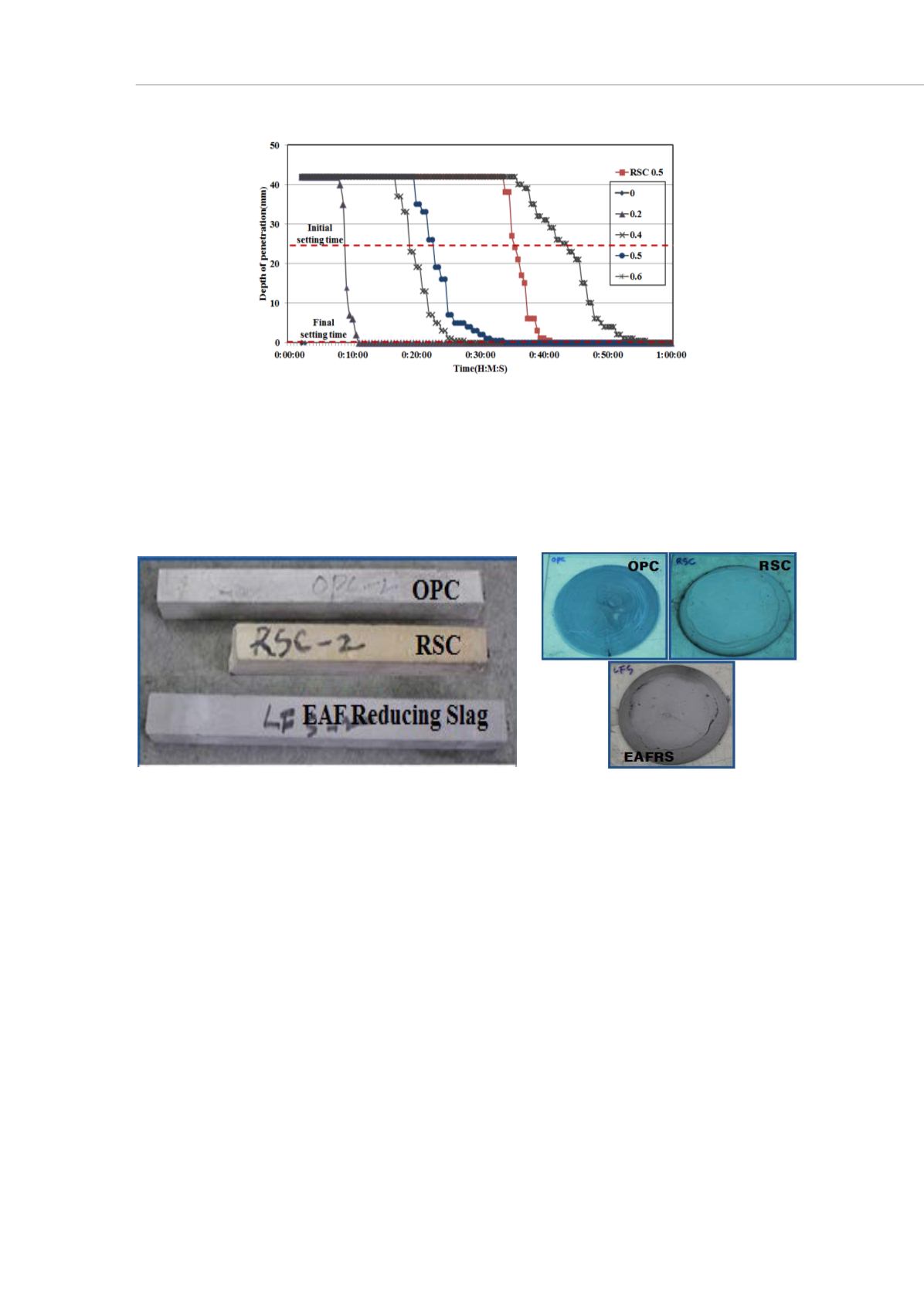
Figure 4 : Setting time of atomizing EAFRS powder
3.3 Stability Estimation
Figure 5 shows the specimen made with OPC, RSC, RC EAFRS powder on which
autoclave expansion test was conducted based on KS and on JIS . While regulated set
cement is destroyed through autoclaving by expansion ettringite created at the initial
stage, the specimen created with RC EAFRS powder is stable for expansion. In addition,
it was confirmed to be stable for expansion and crack through JIS based experiment.
Figure 5 : Soundness determination of cement ( the left side : KS test, the right : JIS test)
3.4 Compressive Strength
For RSC and RC EAFRS powder, it is possible to conduct form removal within a few
hours in the initial stage, so the strength was measured in three hours in the beginning,
and for OPC, the strength was measured after the form removal on the first day. Figure 6
is the graph which shows compressive strengths depending on ages. Since the strength
over 6MPa is developed even in three hours of the initial stage, it is thought that it’s
appropriate for bonding material for emergency repair work and special purpose which
require development of early strength. In case of mortar specimen produced by RC
EAFRS powder, it appeared that there was 60~70% of strength development in the
strength of OPC and RSC on the twenty-eighth day, registering 73% of hydration activity
compared to OPC. Like this, even when RC EAFRS powder is solely used, high strength
is developed in the early stage, rendering properties of strength development in a long-
term sense. However, since it somewhat falls behind in long-term strength development
compared to OPC and RSC, it is considered that various studies such as admixtures,
which can develop strength continuously, should be additionally proceeded so that it can
be used as construction materials requiring long-term durability.
3.5 Length Variation


