H y d r a t i o n P r o p e r t i e s o f I n o r g a n i c B i n d e r
673
10minute
30minute
60minute
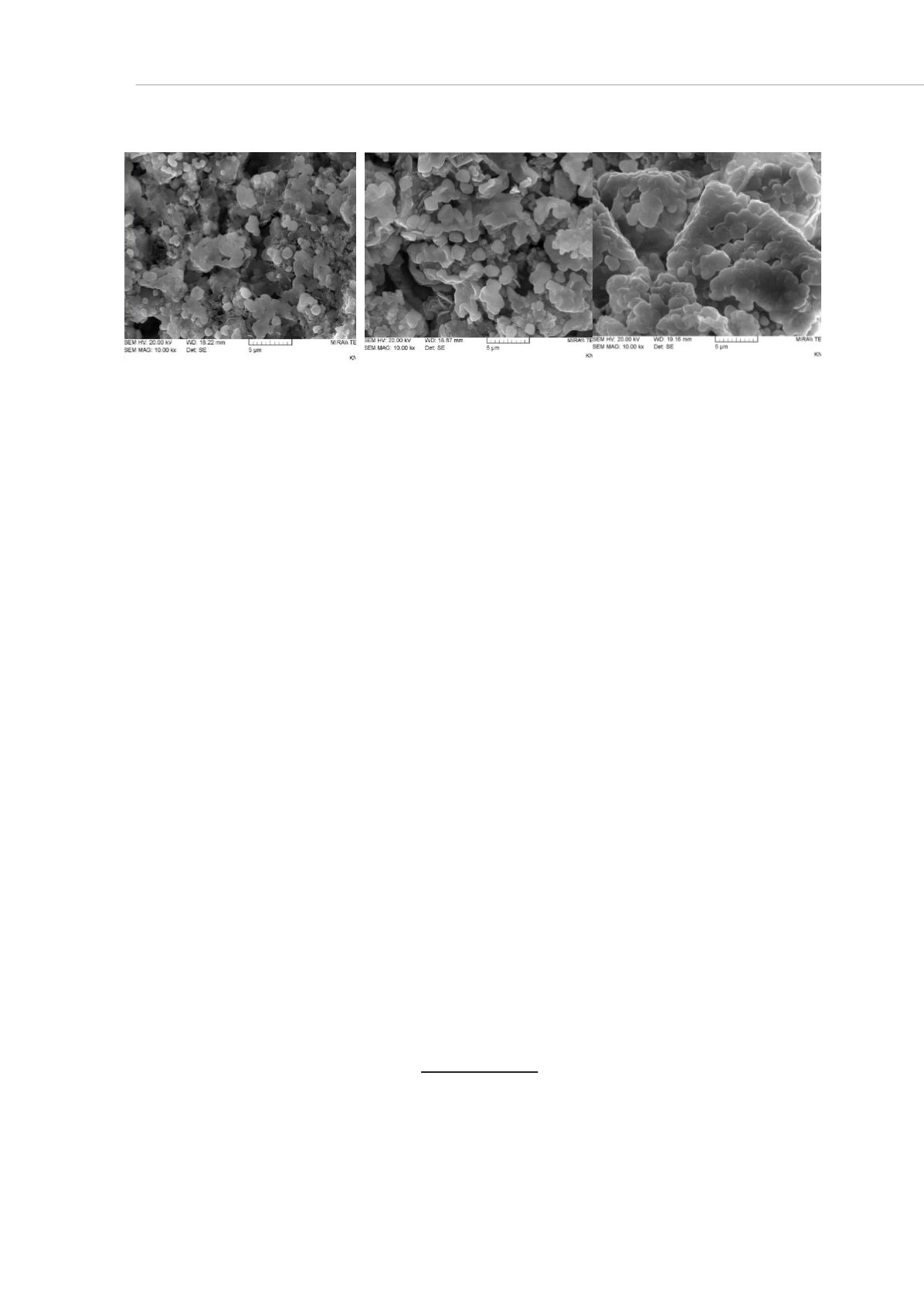
Figure 9 SEM image of the EAF reducing slag powder(×10,000), atomized by high speed air cooling
method.
However, hydrates combined in a connected flat type causes contraction to increase
percentage of contraction, and interrupts penetration of moisture to unhydrated materials,
having bad influence on development of long-term strength as well as long-term
durability. For this reason, it was previously identified that the development of long-term
strength was much lower than OPC and RSC. Thus, in order to use RC EAF reducing
slag powder as an inorganic binder for construction materials, it is required to seek some
ways to improve long-term durability by giving rise to constant hydration reaction.
4. Conclusion
1) RC EAFRS powder has similar mineral compositions to RSC and shows quicker
setting time than RSC. Its work time can be adjusted depending on the use of retarder.2)
As a result of KS and JIS based stability evaluation, it was found to be stable for
expansion and crack.
3) Specimen with RC EAFRS powder develops strength of over 6 MPa in a few hours of
hydration, but shows low strength development after that time. The hydration activity
index compared to OPC is 73% only at 28 age.
4) When rapidly cooled EAF reducing slag powder is used single-handedly, it shows high
contraction compared to OPC and RSC, depending on the binding of CAH hydrates.
Therefore, it is required to develop methods to enhance long-term durability by breaking
the binding of CAH hydrates and constantly maintaining hydration reaction.
Acknowledgments.
This study was supported by the R&D Center for Valuable Recycling(Global-Top
Environmental Technology Development Program) funded by the Ministry of
Environment.(Project No.:11-C21-ID) & the Human Resources Development
of the
Korea Insitute of Energy Technology Evaluation and Planning(KETEP) grant funded by
the Korea government Ministry of Knowledge Economy(No. 20114010203040)
References
2011, Korea Iron & Steel Association,
1994, An introduction to the study of Cement Chemistry, Ssangyong cement
2004, Ferrous Metallurgy for Specialists, by DaeWoong


