Z E M C H 2 0 1 2 I n t e r n a t i o n a l C o n f e r e n c e
290
to expand their production lines into high performance building products. Guardian is a
manufacturing company headquartered in Auburn Hills, Michigan, specializing in float
glass, fabricated glass products, fiberglass insulation and other building materials for
automotive and construction applications. In May 2012, Guardian introduced a line of
new advanced glazing products at the AIA National Convention in Washington DC called
the SunGuard series specifically focused on energy efficiency and energy production.
Guardian partnered with Pythagoras Solar Photovoltaics of Israel to develop a glazing
unit with integrated photovoltaics that could generate electricity while minimizing the
visual impediment of the PV cells. Their partnership with Soladigm Dynamic Glass
produced a glazing unit that can dynamically control heat gain and glare through an
embedded electrochromic film. To coordinate the integration of power and controls for
these systems, Guardian brought in BISEM to manufacture the complete glazing
assembly. This type of collaboration between a long-established and broad reaching
industrial interest and innovative, relatively young technology companies demonstrates
the potential for existing industrial and manufacturing bases to support emerging
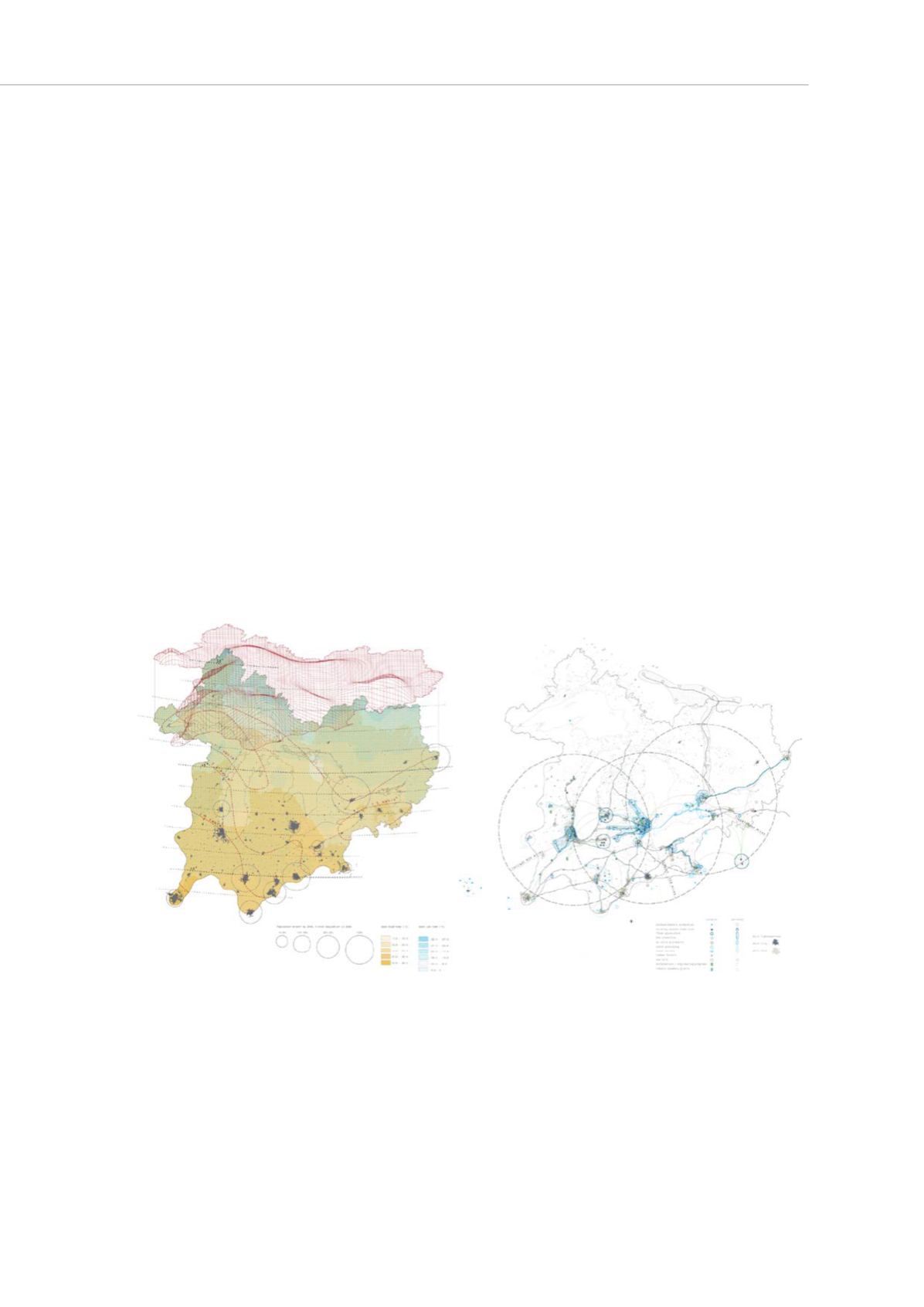
markets for advanced building products. The mapping of
Interlaced Industrial Ecologies
(Fig. 2, right) assembles existing regional systems including timber management and
processing, float glass production and glazing system manufacture, advanced
technology integration, robotics manufacture and architectural and engineering research
centres as a multi-layered network well suited to clean-tech application. We anticipate
this to be constitutive of both a network of partners that could enable the production
model of the Latitude system while also minimizing pre- and post- -manufacturing
material stream loads due to transportation.
Figure 2: Great Lakes Regional mappings illustrating synergistic climatic and cultural conditions
sponsoring a net-energy producing housing geography (left) and the interlaced economic sectors
implicated in high performance mass customized housing manufacturing supply chains (right).
Besides the increased efficiency and economic benefit of coordinating manufacturing at
a regional scale, mass customized housing manufacture offers some advantages in
terms of greenhouse gas and energy consumption reduction during the construction
phase. According to a comparison of the life cycle of a conventional site-built home to a


