Z E M C H 2 0 1 2 I n t e r n a t i o n a l C o n f e r e n c e
292
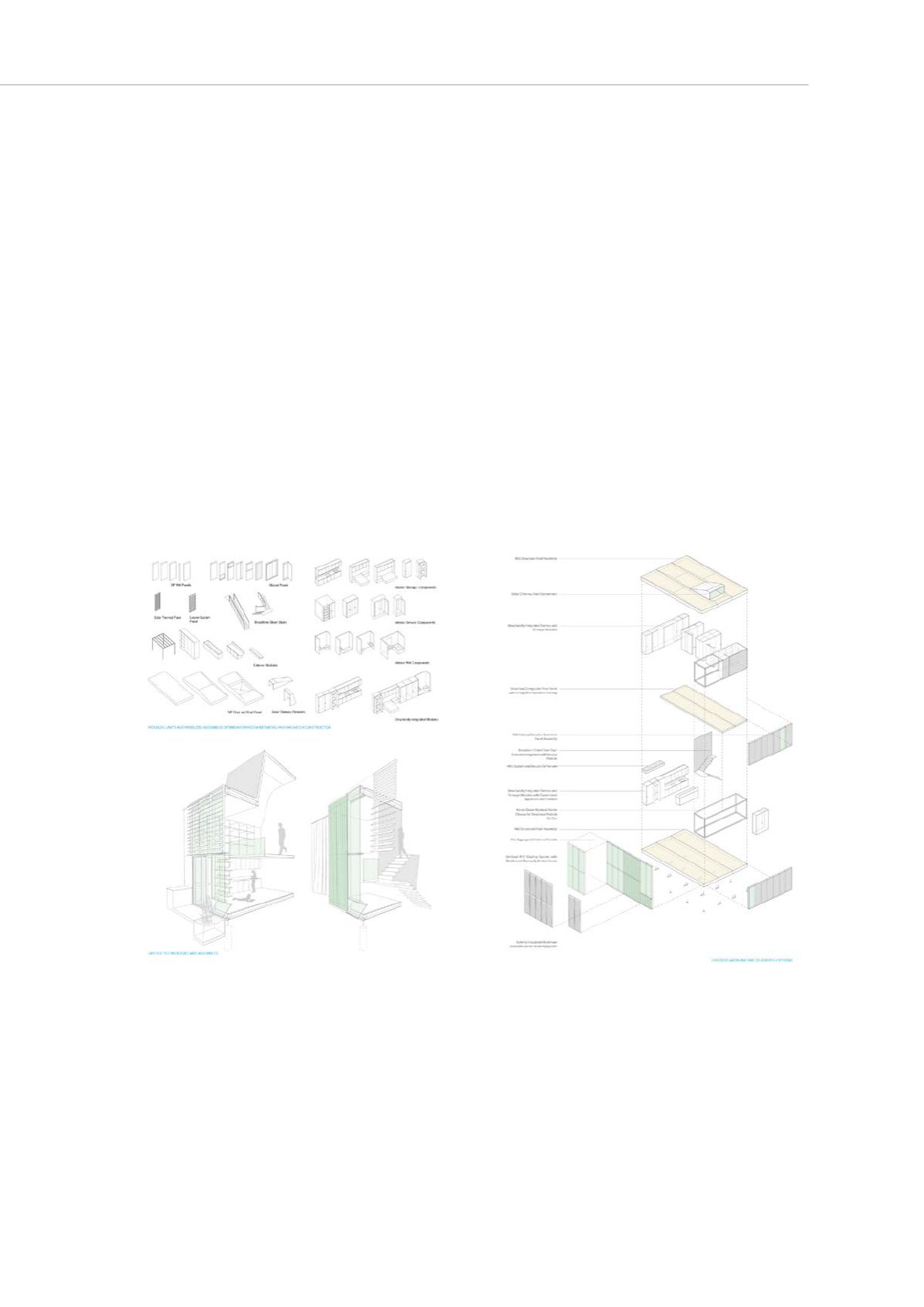
panels are constructed on a 1.1m ordinance and are comprised of opaque insulated
panels, glazed panels, and hybrid energy harvesting panels. These components aim to
deliver a coordinated kit of parts that can be combined to produce a range of spatial
types ranging from 80m2 to 230m2, thereby allowing house configurations to be closely
matched to the needs of the inhabitants. The system also allows the houses to grow or
for components to be exchanged, updated and recycled at the factory in response to
changed familial structures, new technological development or new climatic or socio-
economic challenges (Fig. 4).
The design of the houses encourages a connection to the rhythms of the natural world
and supports healthy lifestyles: large areas of high performance glazing provide ample
year-round daylighting essential for health and well-being (Edwards and Torcelli 2002),
operable panels provide natural ventilation and the system includes a series of decks
that extend the living space outdoors while providing white reflective surfaces in the
winter for increased solar gain with low sun angles. The decks are integrated with raised
bed planting for local food production and include components such as greenhouses,
extended pantries and exterior storage. All of the home systems are connected through
an intelligent user interface designed to sponsor new models of informed inhabitation
and awareness in a net-energy producing residential context.
Figure 3: Latitude system components and assembly: (upper left) system of modular and flat-packed
components, (lower left) cutaway assemblies at glazing panels; (right) components assembled into
two-storey unit


