L a t i t u d e H o u s i n g S y s t e m
293
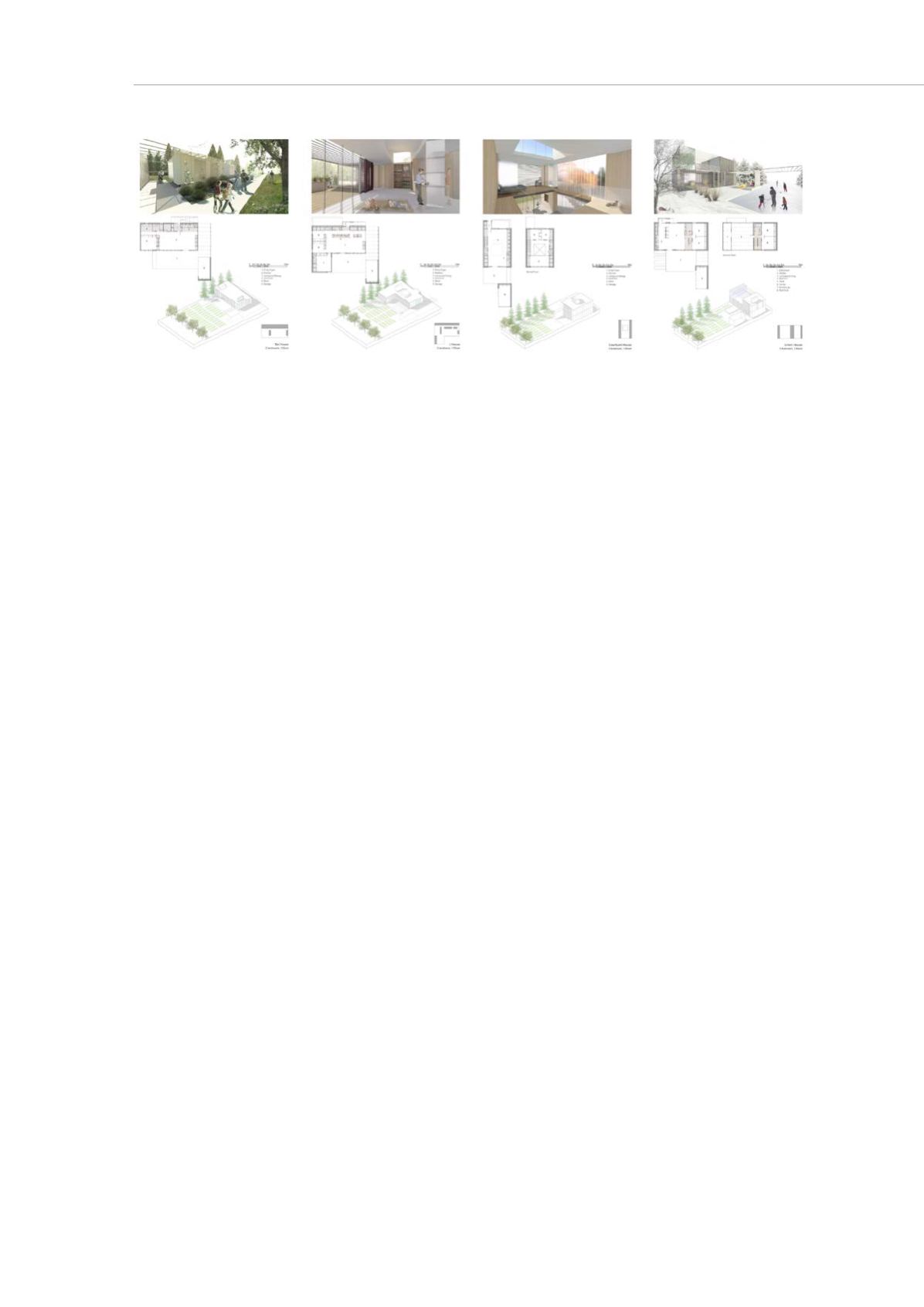
Figure 4: Four typologies possible through the Latitude system: (l-r) Bar House, 2br, 150m2; L-House,
3br, 153m2; Courtyard House, 3br, 145m2; Green House, 4br, 150m2.
Envelope System Assemblies
In order to achieve environmentally responsive envelope performance within the wide
range of seasonal climate extremes characteristic of the temperate zone, the design of
the envelope components is based on an ecological systems approach, wherein the
building skin was composed of performative and interdependent layers that, like the
body’s epidermis, are designed to serve individual as well as cumulative environmental
functions. The layers are capable of automated modifications in response to external
conditions and/or internal demands. Optimized for a broad range of climate variations,
this layered, component-based system enables multiple configurations as defined by
program needs. Fully gasketed construction joint details allow for ease of servicing,
upgrade or replacement of individual components, or whole assembly types.
T
he opaque building envelope assemblies have been designed with high thermal
resistance values, typical of cold-climate, low-energy design. Structural panel
assemblies of engineered wood, with offset framing to create a consistently thick
assembly with no through-and-through thermal bridges, are used in both vertical and
horizontal configurations. Active energy-producing photovoltaic layers are integrated
within opaque assemblies oriented for solar exposure: BAPV panels and solar thermal
collectors are mounted to the roof and BIPV panels can be integrated on South, East
and West facades.
The primary glazed assemblies consist of a floor-to-ceiling custom wood frame curtain-
wall system with a very high thermal resistance albeit engineered to maximize passive
solar gains. The areas of glazing within the houses are maximized in order to connect
inhabitants to the outdoors, and to provide for natural light and passive thermal gain in
the winter months. Unwanted heating loads are managed by an automated active
exterior shading system. Inboard of the primary glass envelope, interior blinds deliver
glare and privacy control. The final performance layer of the system is made possible by
phase change materials (salt hydrate was used in the first prototype) embedded within
the floor’s wood frame assembly to chemically simulate thermal mass: solar heat
absorbed throughout the day helps to passively heat the homes and is also stored for
use as latent heat throughout the night. This aggregate system we have referred to as
the Distributed Responsive System of Skins, or the DReSS (Fig. 5).


