Z E M C H 2 0 1 2 I n t e r n a t i o n a l C o n f e r e n c e
648
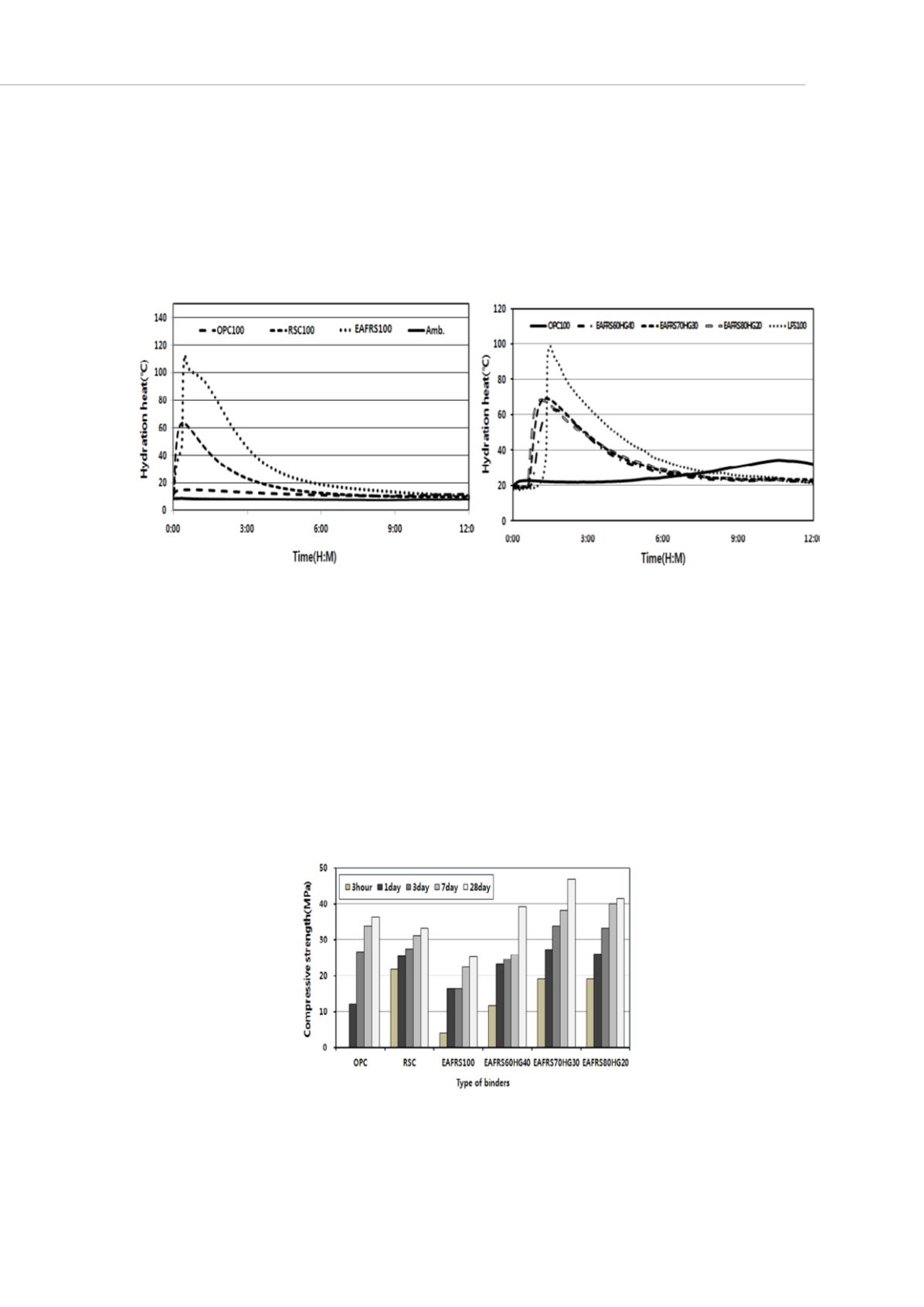
inorganic binder with the high thermal hydration of 110
℃
, the drastic temperature
increase and decrease causes the crack for adverse result in the durability aspect. Fig. 4
shows the thermal hydration characteristics of the EAFRS binder mixed with the gypsum.
The initial thermal hydration with 110
℃
shown in time of the EADRS showed the drastic
hydration heat radiation improvement in initial time for approximately 70
℃
, a similar level
with 60
℃
as the initial thermal hydration value of the regulated setting cement by the
gypsum mixture.
Fig. 3 Hydration heat of EAFRS powder
compared with various binders
Fig. 4 Hydration heat of EAFRS powder with
gypsum compared with OPC and EAFRS
3.3 Compressive Strength
Fig. 5 shows the compressive strength following the material age. The binder that mixed
20% and 30% of the gypsum showed similar strength manifestation with the 28-day
material age strength of OPC for 3-day strength. In addition, compared to the regulated
setting cement, 3-hour and 1-day intensities were slightly lower, but after the 3-day
strength of material age, it showed higher strength manifestation than the regulated
setting cement. In particular, in the event of the binder of 30% of mixture for the gypsum,
it had the 129% of hydration activity than OPC in the 28-day strength for material age
which was much higher hydration activity measured for 69% when using the EAFRS
alone.
Fig. 5 Compressive strength of binders


