M e a s u r e d I n d o o r E n v i r o n m e n t a n d E n e r g y C o n s u m p t i o n
725
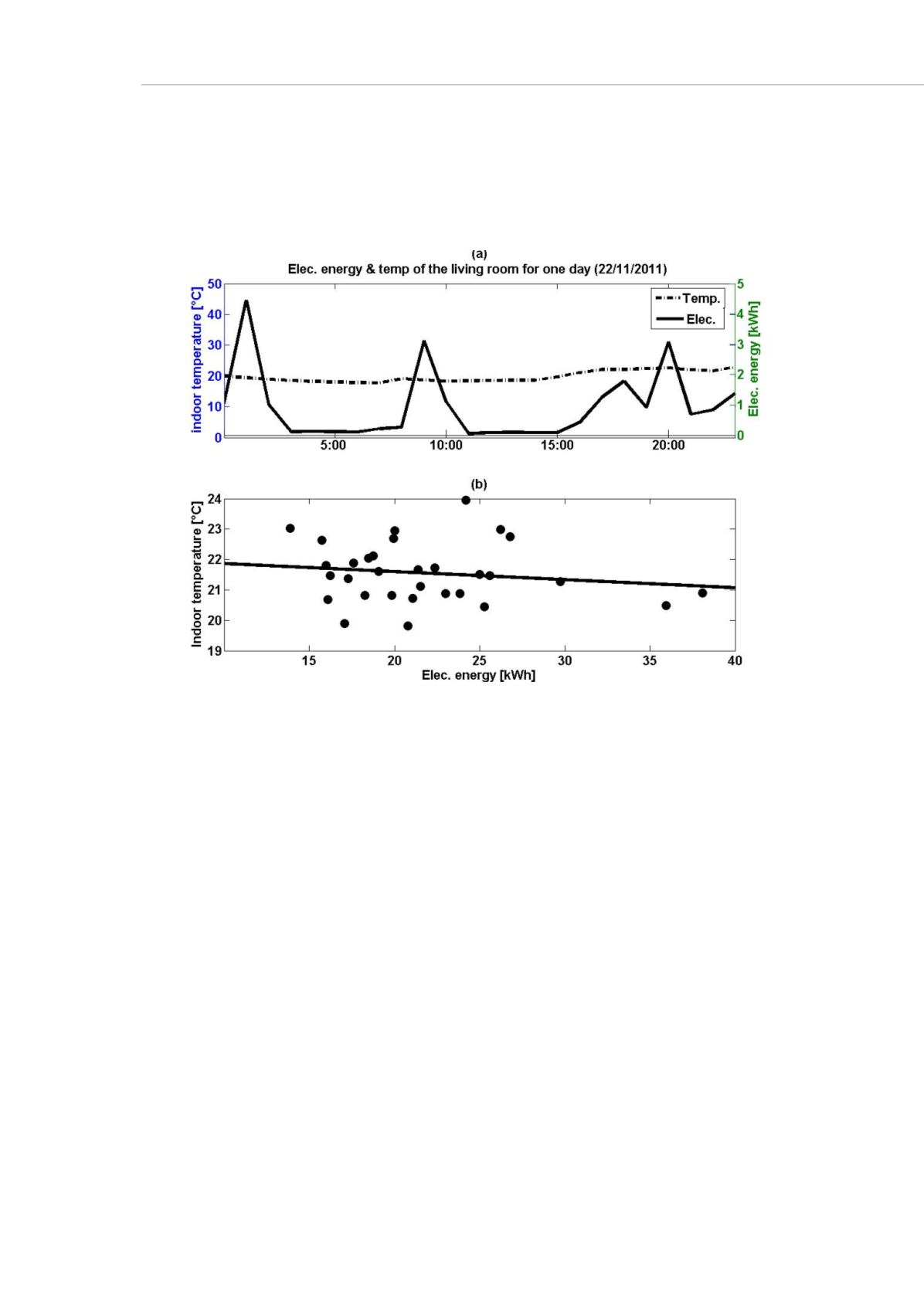
Again, Day (22/12/2011) was chosen to plot indoor temperature against electric energy
consumption for that day. Figure 8a shows the indoor temperature of the living room is
not affected by the change of electric level consumption (Fig. 8a). Monthly indoor air
temperature and monthly electric energy consumption were correlated with statistically
significant results (r =-0.15, P =<0.05). Figure 8b shows this inverse relation (Fig. 8b).
Figure 8: (a) Indoor temperature and electric energy use of the living room for one day, (b)
Correlation of electric energy use versus indoor temperature of one month
Conclusions
This study aimed to investigate the indoor environmental conditions, i.e. air temperature,
relative humidity and CO
2
levels of the NRGStyle home in South Ayrshire, Scotland, UK,
before refurbishment (ZEMCH 109 project). The results were cross-checked with the
UK’s CIBSE guidelines and were assessed as to the range of winter internal
temperatures in living space and two bedrooms in consideration of the thermal comfort
criteria, as well as the relative humidity levels with the acceptable range for relative
humidity (i.e. 40 to 70%). In addition, Indoor Air Quality (IAQ) analysis has been carried
out using CO
2
data gathered whilst the energy consumption figures were correlated.
In this study, the indoor environmental conditions in the NRGStyle home with
comparison to the standard guidelines (CIBSE & ASHRAE), it was clear that the living
space did not comply with the range of recommendation levels of internal temperatures
(22-23°C), however in the two bedrooms, the standards were somehow achieved (17-
19°C). On the other hand, the average relative humidity for the living room and the two
bedrooms comply with the standard guidelines at all times during the sampled week
(16/12/2011 to 23/12/2011).
With regards to the CO
2
levels in terms of IAQ, it was seen that the levels are fluctuating
under the recommended value (1000 ppm) for indoor spaces (including living and bed
rooms), which also indicated the availability of fresh air indoors at most times in the
sampled week with an exemption of the three peaks indicating lack of ventilation during
night times due to closing windows at that time.


