Z E M C H 2 0 1 2 I n t e r n a t i o n a l C o n f e r e n c e
722
contribute to increasing the family’s awareness of housing operation patterns; thus, it
may somewhat help reduce energy bills through the users’ energy-saving behaviour
(Ewgeco 2012) (Fig. 2b). The device was installed in NRGStyle’s existing house which is
located next to the expected ZEMCH 109 construction plot. The energy and resource
usage has been monitored since August, 2011 and for purpose of this study, the data
from the month of December 2011 has been collated and analysed.
Results and Discussion
In order to investigate the indoor thermal condition and air quality in the NRGStyle house,
data were collected from the indoor monitoring equipment and statistically analysed (Fig.
2). The American Society of Heating, Refrigerating and Air Conditioning Engineers
(ASHRAE) recommends that carbon dioxide levels should not exceed 1000 ppm inside a
living space (ASHRAE 2012). The reason to use ASHRAE as CO
2
standard guideline is
that there are no UK carbon dioxide standards for indoor air quality. However, CO
2
is not
toxic but it is used as a guide to whether or not a space has a sufficient quantity of fresh
air. Below is a summary of the findings in the monitored home which are demonstrated
through a series of graphs and descriptions respectively.
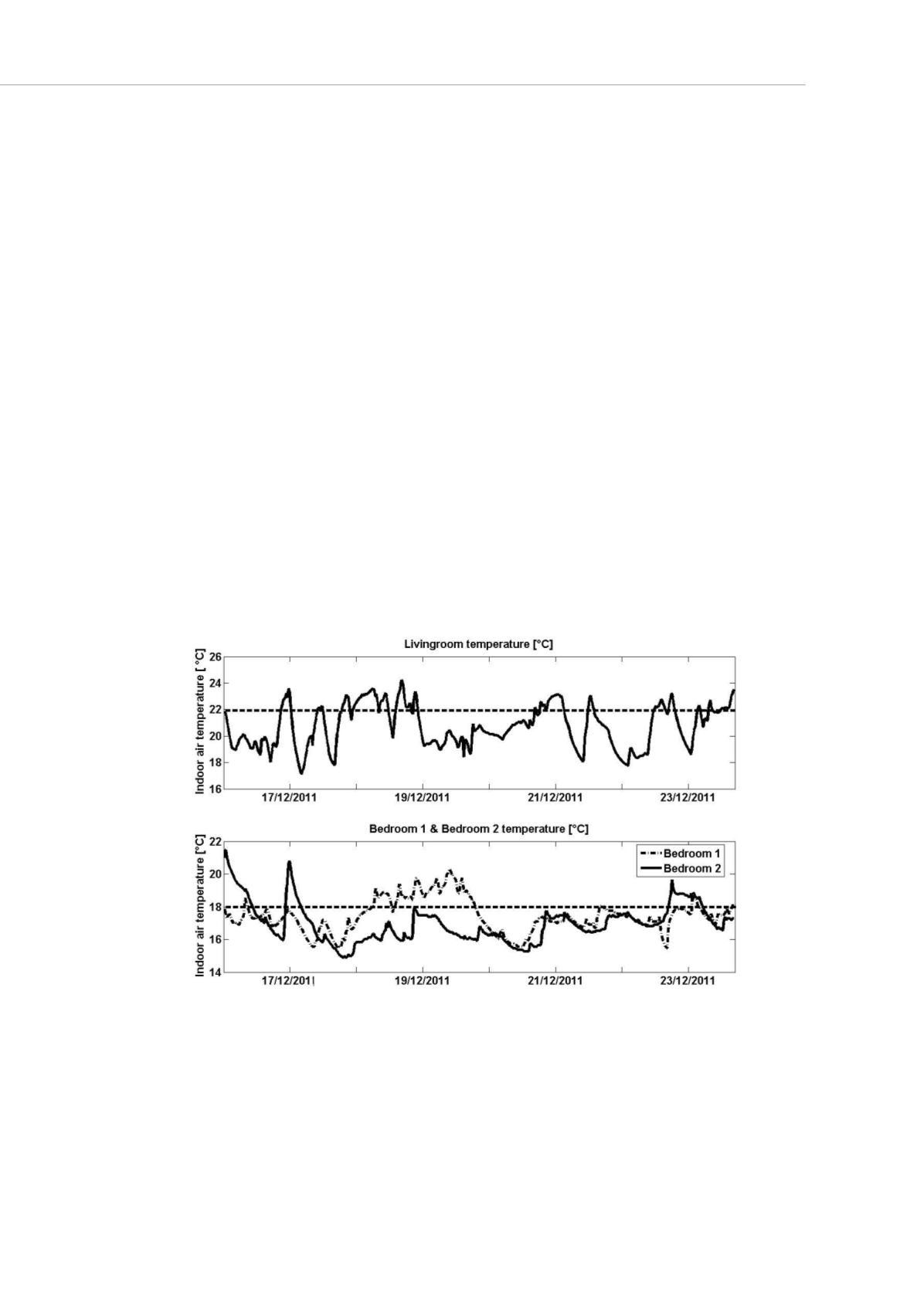
Figure 3 shows the daily mean indoor air temperature (°C) of the living room and the two
bedrooms for one week (16/12/2011 to 23/12/2011). The dashed line in Figure 3 is the
internal air temperature of 22°C recommended in living room and 18°C recommended in
bedroom (Fig. 3). In comparison with the standard guidelines, it is clear that the living
room did not comply with the CIBSE recommendation for the range of internal
temperatures (22-23°C). The two bedrooms comply most of the days for the standard
guideline of internal temperatures (17-19°C).
Figure 3: Daily mean indoor temperature for the living room and two bedrooms
Figure 4 shows the average relative humidity RH% for the living room and the two
bedrooms. The optimum level of humidity should be between 40-70% (CIBSE 2006) (Fig.
4). It can be seen that the living room agrees with the standard guidelines and the two
bedrooms agree with the standard guidelines all the time during that week (16/12/2011
to 23/12/2011).


