Z E M C H 2 0 1 2 I n t e r n a t i o n a l C o n f e r e n c e
720
electromagnetic fields, static electricity and vibration. The influence of these factors on
human beings has been studied extensively and for several of these factors guidelines
for design and measurements have been established (Olesen and Seelen 1993).
The indoor environment is an influential factor to environmental quality. People spend a
majority of their time in buildings; the average western person spends up to 85% of their
life in a building, or in a vehicle conveying them from one building to another. The
housing environment is the main setting for many; consequently certain conditions of this
environment can have a profound effect on the quality of the environment and the
public’s health. Studies have highlighted that at present many people live in conditions
that are considered ‘unhealthy’ because of high levels of mould growth, damp and dust
mite concentrations. Approximately 20% of all dwellings in England suffer from mould
growth and dampness to some degree (Oreszczyn and Pretlove 2000).
Several studies have analysed the impact of low ventilation rates and increased CO
2
concentrations on IAQ complaints and health symptoms in buildings. It is found that high
CO
2
concentrations in office buildings are associated with increased health symptoms
from the occupants (Santamouris et al. 2008).
This study has been undertaken within the Zero Energy Mass Custom Homes (ZEMCH)
research network’s demonstration project ‘ZEMCH 109 in conjunction with the Building
Environments Analysis Unit (BEAU) research centre at the University of Sheffield. The
house is intended to be built in South Ayrshire, Scotland, added to the adjacent existing
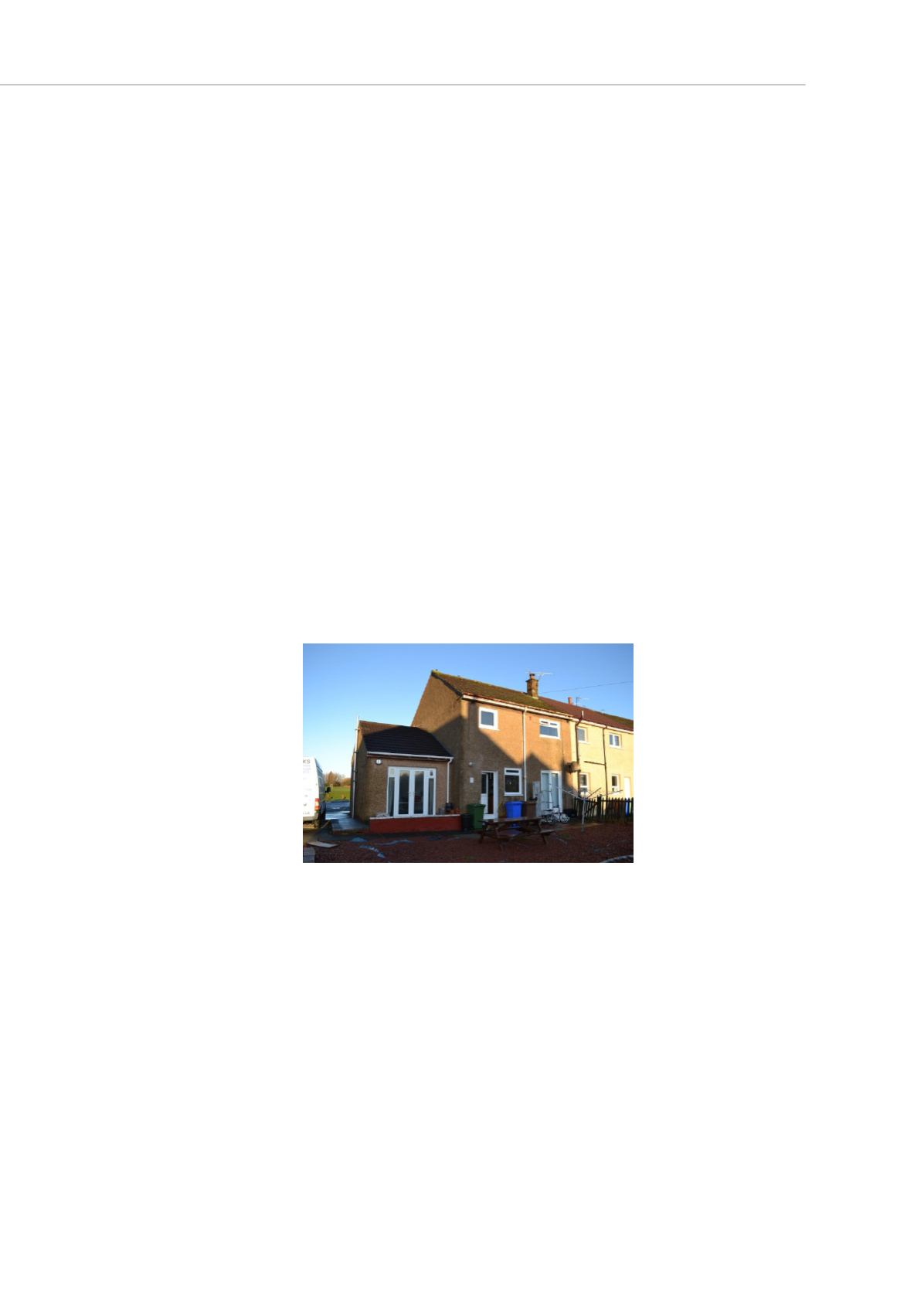
post-council end-terraced house, the NRGStyle home (Fig 1). As part of the project,
BEAU research centre has carried out a post occupancy monitoring of the indoor
environmental conditions (e.g. indoor air temperature, relative humidity and CO
2
levels)
in the Scottish affordable home (Fig. 1). At the same time, energy consumption (e.g.
electricity, gas and water) was also monitored through a smart meter (NRGStyle 2012).
Figure 1: NRGStyle home, South Ayrshire, Scotland, UK
In the study, it is important for the successful demonstration of the ZEMCH 109 project
that detailed monitoring and post occupancy evaluation (POE) are performed sufficiently
to investigate the relationship between human behaviour and energy consumption, and
the indoor environmental conditions. Moreover, the results are cross-checked with the
UK’s Chartered Institution of Building Services Engineers (CIBSE) guidelines and also
assessed as to the range of winter internal temperatures in living space and two
bedrooms in consideration of the thermal comfort criteria, as well as the relative humidity
levels with the acceptable range for relative humidity (i.e. 40 to 70%). In addition, Indoor
Air Quality (IAQ) analysis has been carried out using CO
2
data gathered whilst the
energy consumption figures are collated. Table 1 describes the type of building, home
age, dwelling-tenure, window type, ventilation method, cooker type, and number of
occupants, and their ages of the NRGStyle home in South Ayrshire, Scotland (Table 1,
Fig.1).


