L o w C o s t H o u s i n g R a t i o n a l D e s i g n M e t h o d s
375
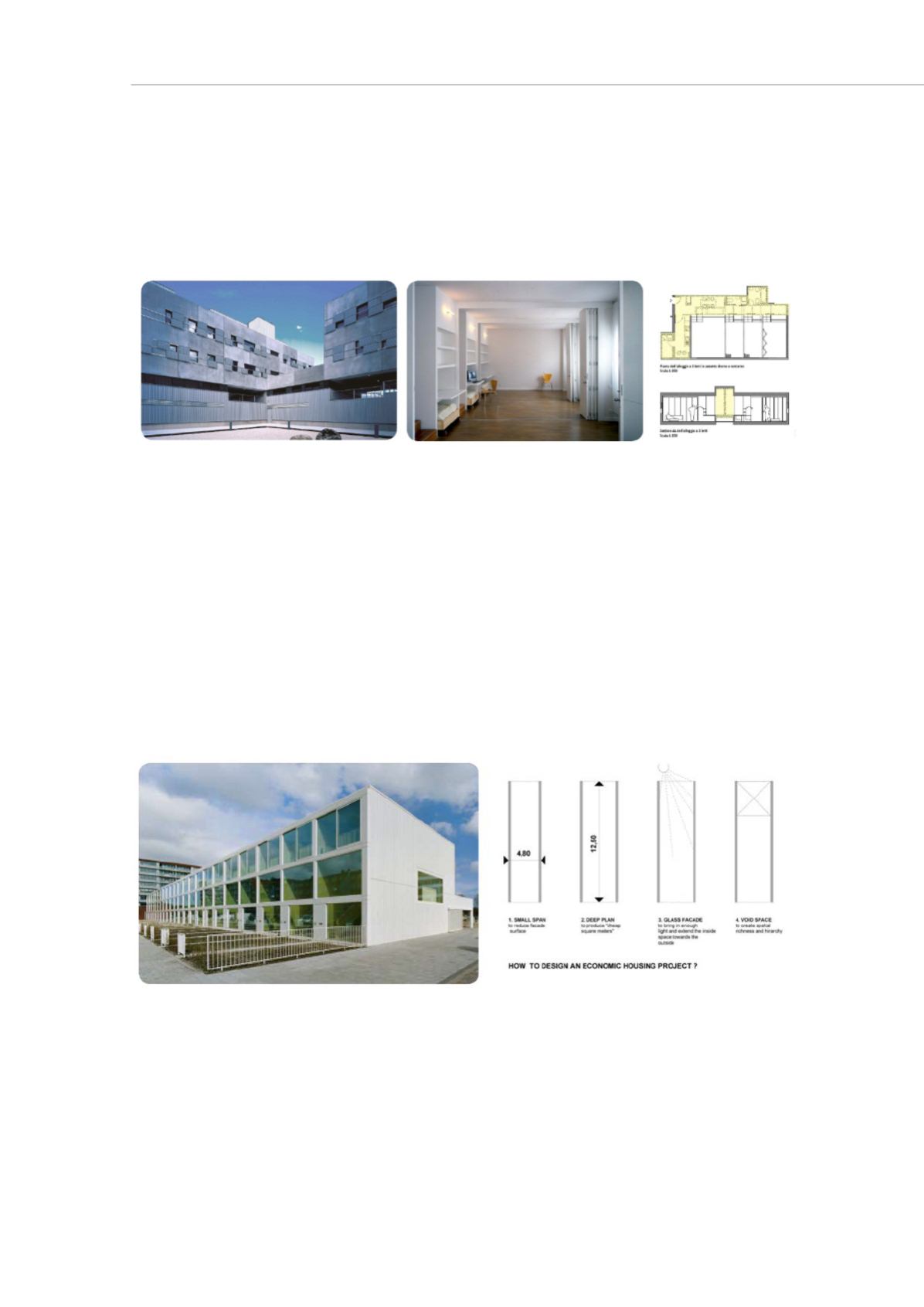
arrange the space in different ways during the day: the walls can be retracted in day-time
and the bedrooms are transformed into living areas, hiding the beds below the central
spine; during the night, instead, through the subdivision with movable walls, single rooms
are created and the internal connection is along the central corridor. This high spatial
experimentation is possible, even in this case, only through the use of a frame
construction system that guarantees a high degree of standardization and low
construction cost.
Figure 3: Case Study #2 – Aranguen&Gallegos, Social housing, Madrid – Spain, 2003
A similar comparison between typological device, its updating and realization with a
precise construction system and the consequent reduction of its social and
environmental cost is possible also for the other two layout systems highlighted: in the
project done in 2008 by the Atelier Kempe Thill for a low cost housing in the Osdorp
district in Amsterdam –
case study 3
, for example, merging the characteristic of both a
single family house with a multi-storey housing project in a low budget design addressed
the choices to a mixed structure in concrete and steel with a reduced span of 4,80mt.
This reduction allows a 20% saving on the façade cost and the construction of a building
with a depth of 12mt. The designers realized in this way a certain amount o “cheap
space” in the middle of the volume useful for future growing of the living space and
improvements of the energetic performance of the building out of the increased ratio
surface/volume.
Figure 4: Case Study #3 – Atelier Kempe Thill, Townhouses, Amsterdam – Netherlands, 2008
It is crucial, therefore, nowadays not only rethinking the possibilities of not-finished and
not responding to formalized uses and needs living typologies, but also considering
frames open to future housing chosen by the users and that could change in their life
span, on the other hand the key is anticipating the technological and structural
possibilities of innovative and complex systems.


