Z E M C H 2 0 1 2 I n t e r n a t i o n a l C o n f e r e n c e
378
extendibility is possible only by adding unit with consequences for the surrounding
homes and semi-private space.
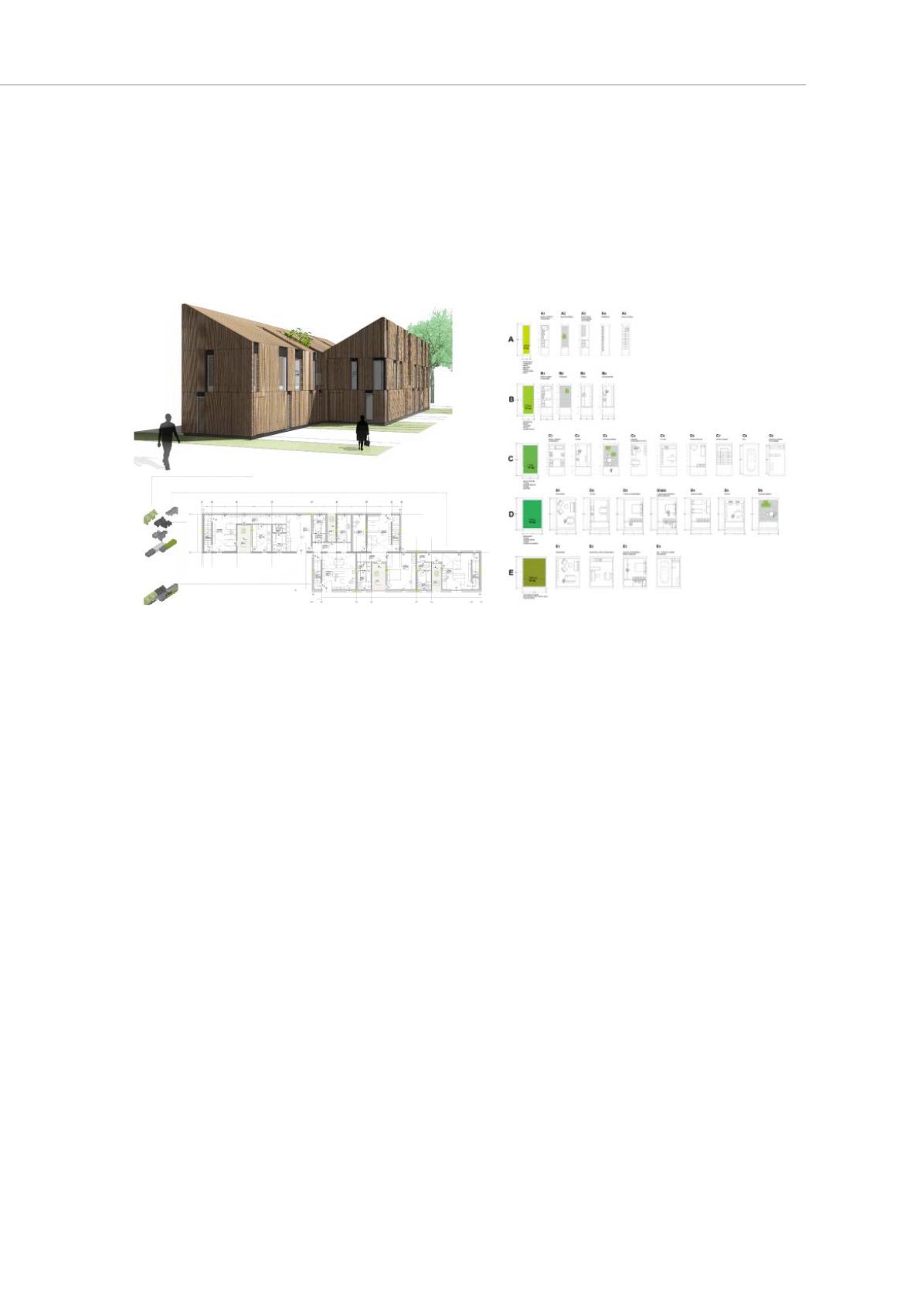
This limit of the evolutive house is balanced, in this case, using the X-Lam technology:
the potential future cost for a complex transformation is compensate with the use of a
material which is natural, recyclable, quickly and dry assembled, reducing in this way the
costs connected with the production and the construction.
Figure 7: Case Study #5– Stefano Boeri, Casa Bosco, Milan - Italy, 2009
It is, therefore, the prefabrication of the structural system that makes the difference in
terms of costs (economic, environmental and social), both in case of a wood or a
concrete structure, with a frame system or a monolithic one, and even if applied not only
to the structure but also to the single components of a building.
These components, done off-site in special factories and quickly assembled in-site, in
one word the use of “modern methods of construction”, are mainly:
o
panels
, including ready-made walls, floors and roof, often with wiring and pluming
already inside, making construction even faster;
o
modules
, ready-made rooms which can be pieced together to make a whole
house or flat but used most frequently for bathrooms and kitchens.
Prefabrication in housing is not new, but problems arose over the quality of building
materials ad poor workmanship, leading to a negative public attitude towards
prefabrication; today, for these reasons, the majority of homes are still constructed using
traditional “brick and block” masonry. However, within the last few years there has been
increased use of modern methods of construction, driven by a range of factors including
demands for faster construction and skills shortages. Many of the benefits of using
prefabricated components are yet unproven or contentious, but they are in any case
referable to the different component of the “generic cost” of a building:
o
economic cost, as housing could be build more quickly and with fewer defects, in
particular reducing on-site construction time up to 50% and thus reducing labour
costs;
o
social cost, as there may be fewer accidents, thanks to the highly skilled labour
for precise on-site labour, and less impact on local residents during construction;
o
environmental cost, as the building can be more energy efficient, may involve
less transport of materials, and produce less waste.


