Z E M C H 2 0 1 2 I n t e r n a t i o n a l C o n f e r e n c e
386
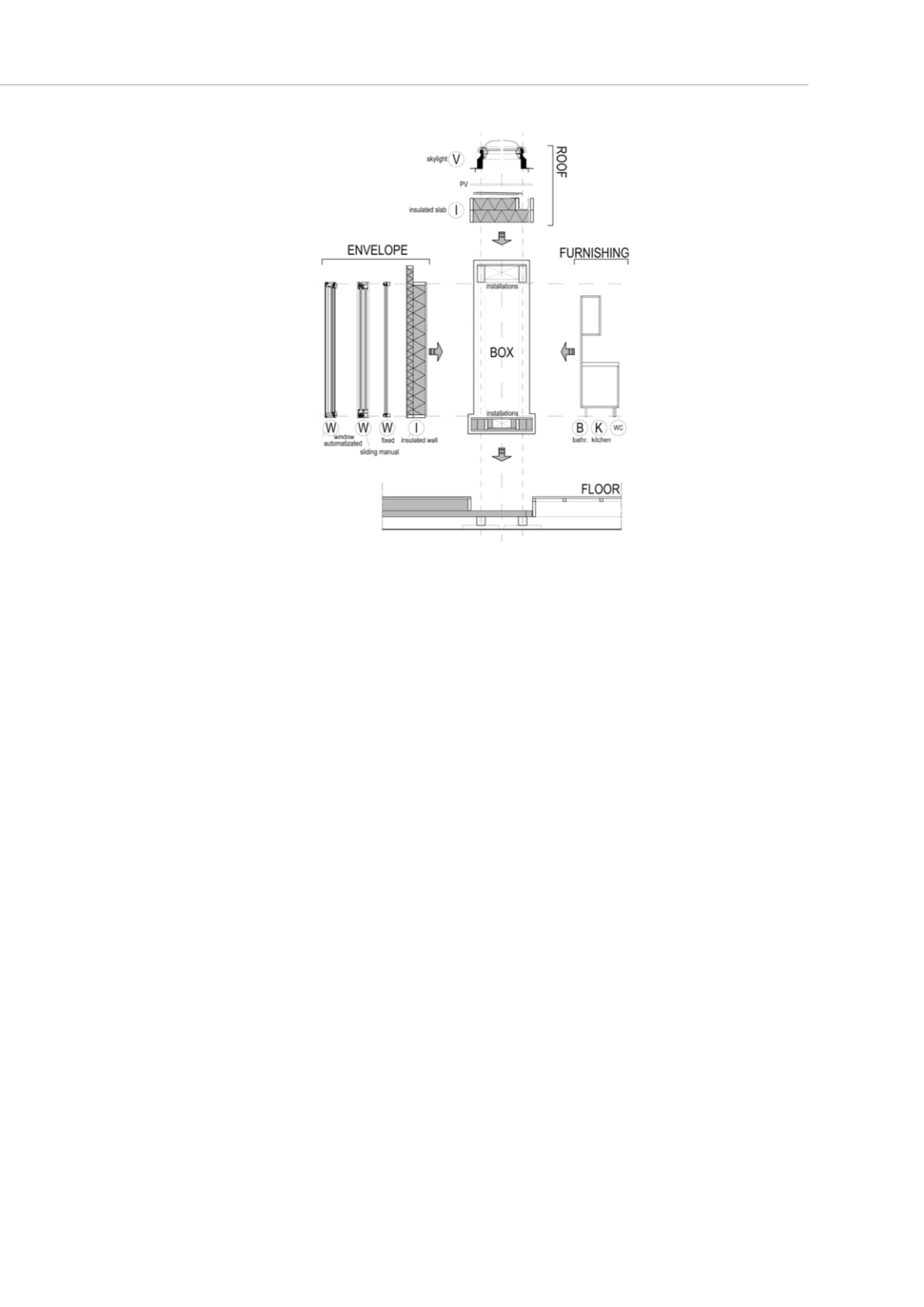
Figure 3: All-in-one box. Section and interchengeability of components principle.
+hytte as Zero Emission Building.
The ZEB research centre at NTNU is working in the creation of a transparent and
verifiable definition for a new generation of zero-emission buildings and neighbourhoods.
At the time present four different levels of ZEB buildings have been identified; each of
them aiming, with increasing ambition, at balancing emissions due to:
O/Eq. –the use of the technical equipment.
O – the building operation.
O+M - embodied in the used material.
C+O – due to the construction and demolition of the building.
All the ZEB pilot buildings that will be designed and built within the next years will
exclusively rely only on the energy produced by on-site renewables (integrated PV
mostly). Their accomplishment with the ZEB targets will be verified through four different
steps:
1. Verification of the energy balance on a yearly basis (and related CO
2
emissions
on the basis of standard EU conversion factors for the different energy sources).
2. Verification of record-level energy (Comparing simulation results and energy
effectively used for heating, hot water, fans, lighting.
3. Verification of the energy mismatch between production and demand on an
hourly, monthly and yearly basis.
4. Providing comfortable environmental conditions inside the building (temperature
values, fan speeds, CO
2
quantity in the air, noise, light levels)
As one of the pilot buildings built inside ZEB, +hytte will have also to accomplish all
these four requirements. It was thus necessary to perform a series of simulations in
order to optimize its environmental behaviour, reducing its energy demand, then also to
quantify how much energy we could expect from the integration of photovoltaic panels in
order to estimate which level of ZEB we could aim for.
In order to do that the +hytte has been modelled inside two different simulation software:
SIMIEN commonly used in Norway for quantifying the thermal demand of the building –


