+ H Y T T E . a V e r s a t i l e C o n s t r u c t i o n S y s t e m
395
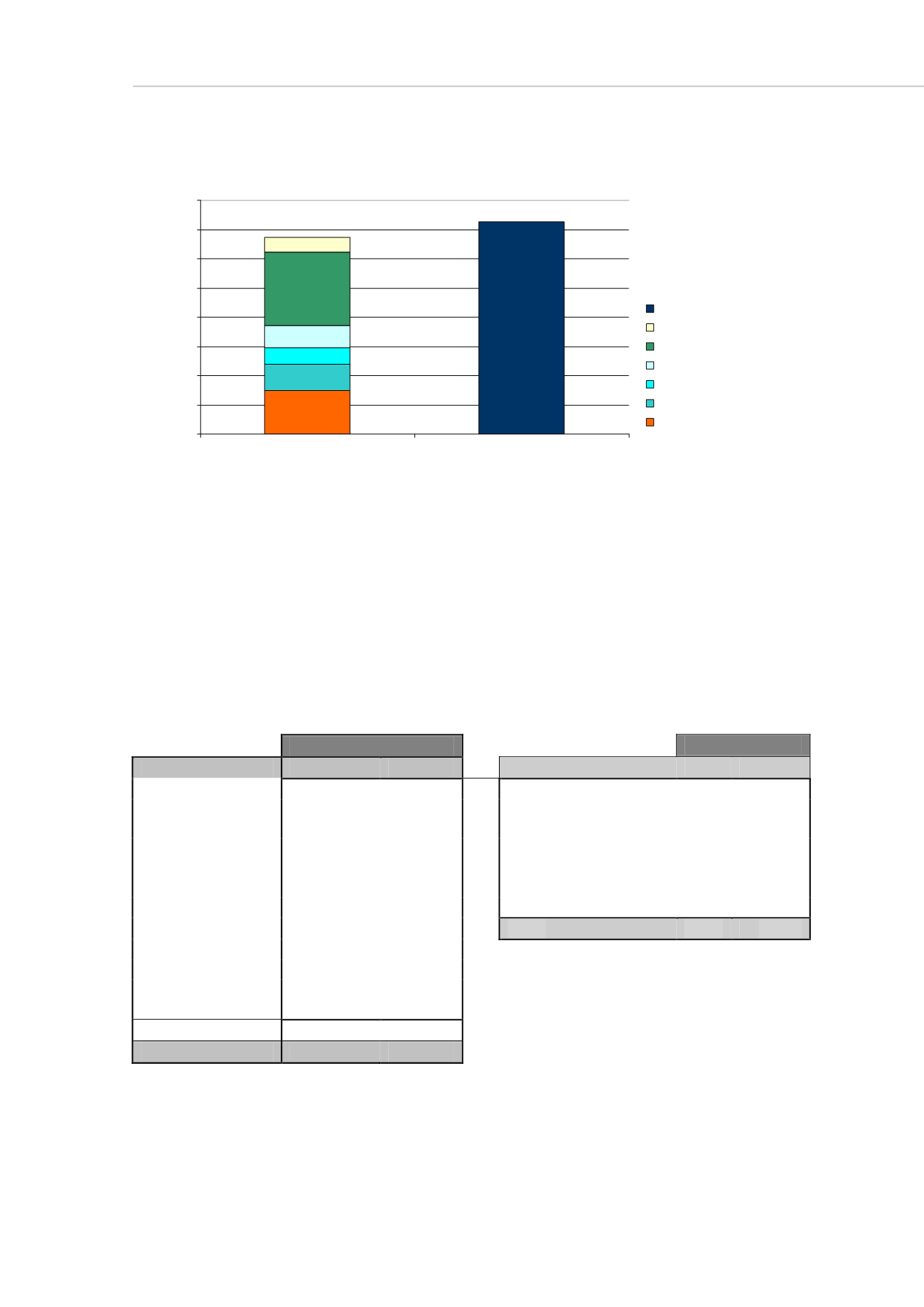
Fig.7 total CO
2
footprint of the building and CO
2
savings due to PV integrated.
Discussion.
Final simulations conducted on the model showed that it was extremely difficult to further
reduce the energy demand of the building and fulfil passive house requirements - EN
3700 (residential buildings). This seemed to be possible either through the use of a
dynamic building envelope able to respond to the external climatic conditions by
regulating the access of solar radiation and air either increasing the compactness of the
building imaging the construction of a second floor. The first solution will require more
attention and will be further explored in the following weeks. The second solution of a
building with same characteristics of the model M-3 but with a second floor in addition
gave the following resulted into the following values:
Table 7: Two floors +hytte. Energy demand and delivered emergy (SIMIEN).
Energy Demand
M-3(2)
Delivered Energy
M-3(2)
KWh
KWh/m
2
Heating
3627
17,05
Direct electricity
KWh KWh/m
2
Ventilation
heating
0
0,00
Electricity(heatpump) 4899
23,03
Hot water
6341
29,80
Electricity(solar
syst.)
2185
10,27
Fans
414
1,95
193
0,91
Pumps
136
0,64
Lighting
1864
8,76
Total
7277
34,20
Technical system 2486
11,68
Cooling
0
0,00
Ventilation
cooling
0
0,00
Total
14868
69,88
That means that passive house standard could be fulfilled. It is anyway worth to
underline that the delivered energy is reduced from 37,7 to 34,2 KWh/m
2
. That means
that, although the delivered energy demand is significantly lower, the achievement of
ZEB targets is not necessarily easier to fulfil.
0,00
2,00
4,00
6,00
8,00
10,00
12,00
14,00
16,00
E Demand
E Production
Kg/m2y
PV
Construction process
Materials
Appliances
Lighting
Fans&pumps
Thermal


