Z E M C H 2 0 1 2 I n t e r n a t i o n a l C o n f e r e n c e
384
and desires (characteristic that would have resulted particularly relevant for the use of
the building as a living lab).
The original concept was developed inside the ZEB research centre during twelve
months of design in which flexibility was further enhanced and addressed to solve many
other issues. +hytte is today an off-grid construction module that can be located in rough
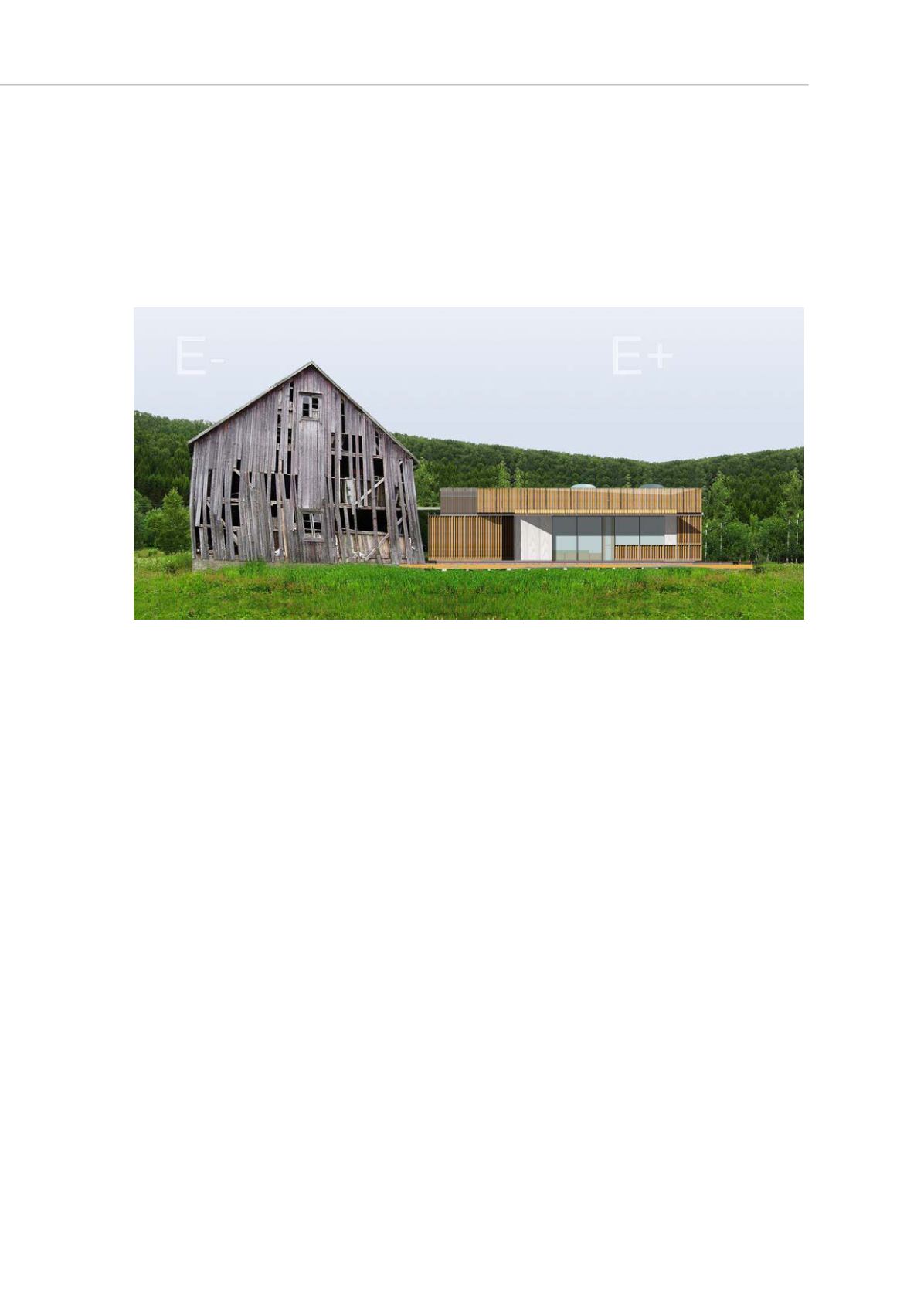
nature or also in the urban jungle; or an extension of detached family houses able to
compensate their lacks in energy efficiency (fig.1) (e.g. detached wooden houses
represent the most energy demanding typology in Norway).
Figure 1: +hytte concept. Possibility of attaching the module to existing buildings.
+hytte as a living LAB and Test-cell.
Once built, the ZEB research center at NTNU will use the +hytte project as a Living Lab
for action research on lifestyles and technologies. A test-cell for testing components and
materials developed by the ZEB industry partners will also be built. Thanks to these two
buildings whatever technology is investigated inside the research centre, it will be
possible to test its performance in relation to different users and lifestyles in the living lab
and climatic conditions inside the test cell.
Interchengeability of components inside each of these buildings but also between them
represents a fundamental requirement. For this reason both the Living lab and the test
cell have been designed on the basis of the same construction system that allowed the
different components constituting the building to be removed and replaced in time
without affecting the overall system (fig.2).


