Z E M C H 2 0 1 2 I n t e r n a t i o n a l C o n f e r e n c e
304
2.
“Accounting system” (classification of energy demands sectors which are included in
the balance: e.g. space heating, domestic hot water, cooling, air conditioning,
auxiliary energy, lighting, central services, appliances, plug loads, embodied energy,
etc.);
3.
“Conversion factors” with respect to the chosen metric (national or political factors,
asymmetric weighting factors or time dependent conversion factors, etc.);
4.
“Normalization” (suitable reference area like usable, treated, net or gross floor area or
person, building or gross respectively net volume);
5.
“Balance period” (regulation of the time in which the equalized balance should be
achieved, e.g. life cycle balance year or month).
A further, sixth category relevant for the ZE approach and the building’s design is the
definition of the “balance boundary”.
2.
Balance boundary vs. energy supplies for Net ZEBs
2.1 Balance boundary
The balance boundary defines both the physical boundary of the project which is part of
the energy balance consideration (single building, cluster of buildings or even in wider
agglomerates) and the generation sectors, which clarify which renewable energy options
are considered and how.
A broad frame (e.g. cluster of buildings) implies a synergy between several buildings,
which are not necessarily Net ZEBs as singles but as a whole: buildings with a positive
energy balance can compensate the ones with negative balances.
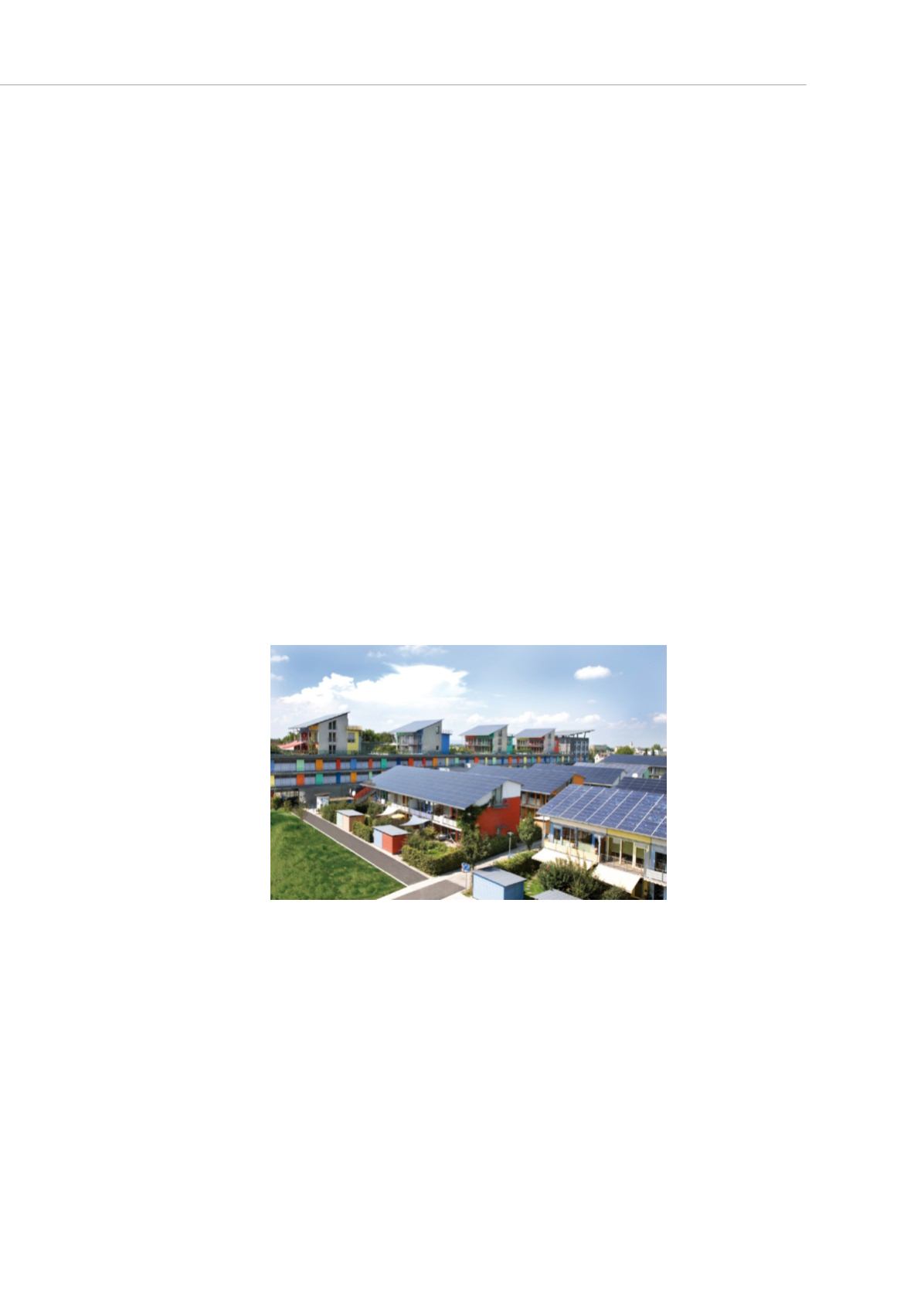
Figure 2: Net Zero Energy Buildings Cluster : Plus energy settlement in Freiburg (DE), design: Rolf
Disch. The Plus Energy Settlement in Freiburg is an example where the zero energy balance is
achieved in the frame of an estate. Some of the 59 built terrace houses have a positive, others a
negative primary energy balance. The average is clearly positive. The efficient row houses are
covered with 3150 m² of roof top integrated PV generators. The heat is supplied by district heating.
The efficiency of the houses bases on the Passive House concept, and a consequent (urban)
planning for shadow-free south orientation, position and shape of the buildings. Source: Rolf Disch.
This approach is possible in the case of new buildings and districts design (figure 2), and
it is particularly suited for projects on existing buildings or cities (figure 3). In particular, in
the case of interventions on existing buildings in “dense” cities, where the surfaces for
placing the energy generation systems are limited, very often a single building cannot
reach the Net ZEB balance on its own. Generally, the energy demand is high (obsolete
envelopes or vertical buildings with high density of energy consumption), compared to
the available surfaces for solar systems, and the effect of shadow limits a lot the use of


