Z E M C H 2 0 1 2 I n t e r n a t i o n a l C o n f e r e n c e
312
target compared to the features of the PV technology.
There is a limit to how much energy can be generated per m
2
PV collector (depending
basically on the PV efficiency, on the tilt and azimuth angles of the PV generator, on the
latitude, as well as on the BOS efficiency). As a consequence, due to the low energy
density of PV, the building envelope might not be sufficient to generate all the energy the
buildings needs.
These considerations lead to a possibility of using PV in proximity of the building when
the envelope surfaces available for PV are not large enough for achieving the Net ZEB
balance. Moreover, a ZEB, when connected to the grid (Net ZEB) might have a fully
matched annual energy balance, but in the case of PV, the load match (the fraction of
electricity directly consumed) is in the range of 30%, or even less. [Voss 2010] For this
reason it could be favourable to feed electricity into a grid for nearby consumption in
another building. This implies that the issue of PV in ZEBs should be discussed on the
level of the building as well as on the level of the buildings cluster or at the urban scale.
This condition points towards an architectural focal point of the discussion that this paper
would like to open: the need of investigating the use of PV in ZEBs from the architectural
scale (one building) to the urban scale (a cluster of buildings) or, even, to the landscape
scale.
An analysis of 30 case study buildings from ten countries documented in the IEA SHC
Task 40 - ECBCS Annex 52, revealed that the buildings' solar PV systems were mostly
delivering only a small fraction of the total energy need (very low match).
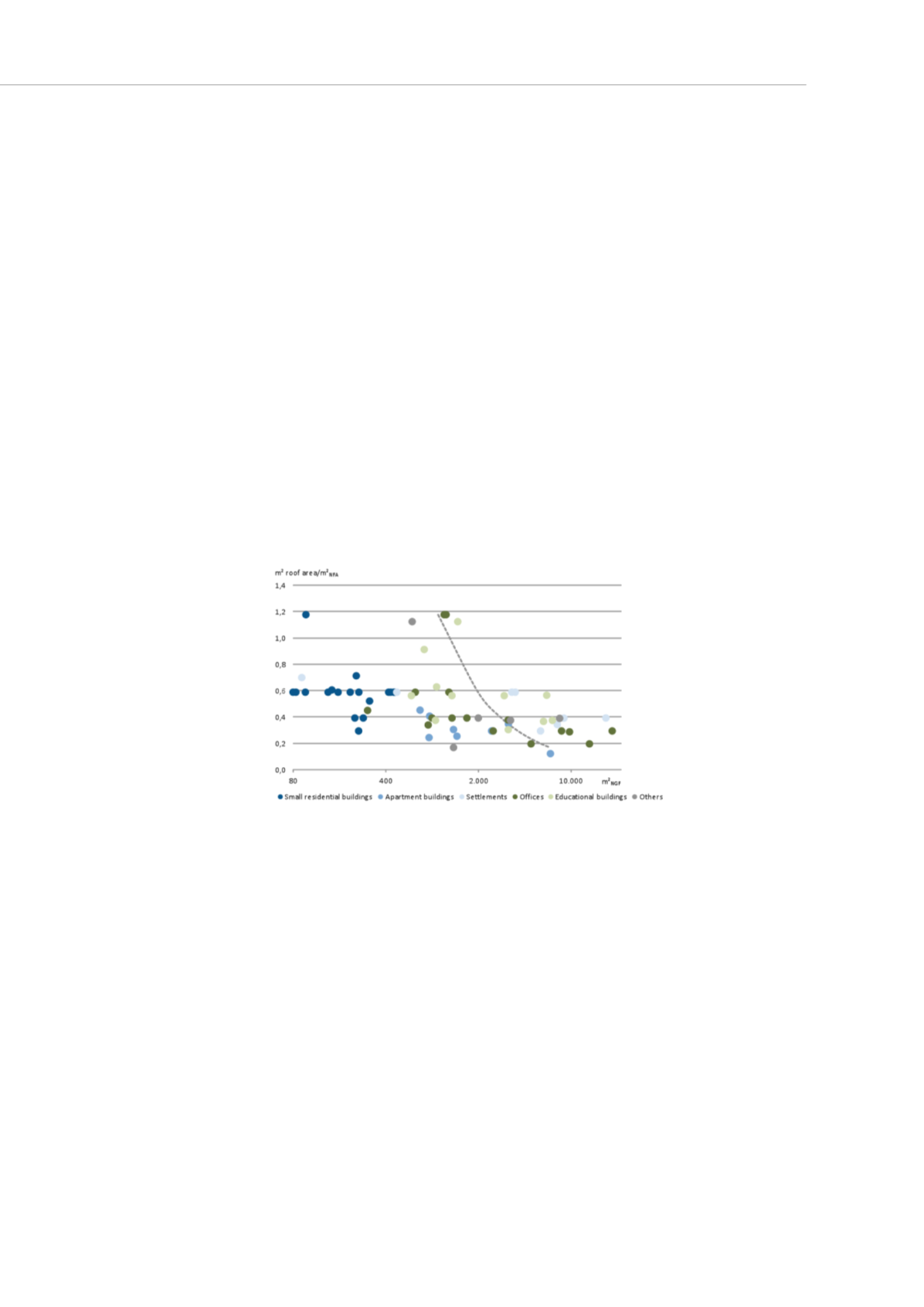
Figure 9: The potential of roof surfaces for the solar generation of energy/electricity (here flat roofs
for reasons of simplicity) in relationship to existing net floor area of known Net ZEBs in heating
dominated climates. For projects with a higher energy demand (non-residential or renovated
buildings) the useful roof area decreases in comparison to the net floor area. For contemplation
purposes the line shows the theoretical increase of usable floor area with an increasing number of
storeys and a constant roof area. Source: University of Wuppertal, compare to [Voss Musall 2011]
In spite of this, in many cases the PV modules were sticking out the building's footprint,
in a way that the design challenges had not been adequately addressed.
Nevertheless conceiving a PV system in a Net ZEB so that its formal result is satisfying
should be possible, and it is a further step for research on the use of PV in buildings.
It is worth to note that the Net ZEBs scenario changes the context for the use of PV in
buildings. Until now, in fact, the main architectural challenge was how to use PV in a
satisfying, pleasing, way [IEA 2008b], whereas in the case of Net ZEBs, the use of PV
has to be calculated on the building’s energy demand, and this implies generally bigger
surfaces than in the past, and an increased attention to the energy performance of PV
(optimization).


